
Caddie's Gear Advisor
Curated for today's 101°F · Clear
Ultralight Distance Drivers
Maximum carry in hot, low-drag conditions
UV Protection Apparel
UPF 50+ cooling fabrics for peak-sun rounds
Precision Rangefinders
Slope-adjusted yardage in any condition
Hydration & Cooling
Insulated bottles and cooling towels
Your Golf Trip, Handled
The Ultimate Golf Trip Planner
Everything you need to play Andrews County Golf Course — from booking your flight to checking in course-side.
Course-Side Stays
Luxury hotels, resorts, and stay-and-play packages just minutes from the first tee.
Flights
Compare fares across 700+ airlines for the best route to your tee time.
SUV Rentals for Golf Bags
Spacious vehicles with room for clubs, bags, and your foursome.
Travel Insurance
Coverage for medical, weather delays, and gear at your destination.
Andrews County Golf Course: Course Intelligence
Signature Setup
Andrews sits on the flat, dry tableland of the Texas Permian Basin, and the wind is the first thing any visiting golfer should plan around. The town is at roughly 3,200 feet of elevation, so the ball carries a touch farther than your sea-level instincts expect — call it 4–5% on a full iron, enough to fly a green you thought you had clubbed correctly. Andrews County Golf Course is the area's municipal layout, a par-72 county-run course built to serve the oil-patch community across the middle of the last century. It plays as an honest, walkable plains course: no ocean, no mountains, just length, firm turf, and a constant crosswind that does the defending. I should be straight with readers — I have not played a full 18 here myself, so the hole-specific notes below lean on regional Permian Basin patterns and the course's own scorecard rather than my personal scorecard.
Hole-by-Hole Wind & Playing Lines
The prevailing wind across Andrews County runs out of the south to southwest for most of the playing season, and direction matters more than the printed yardage. Three places to respect:
- The #1 handicap par-4: Into a fresh SW afternoon wind this hole stretches a club-and-a-half longer than the card. Hit a controlled tee ball into the fairway rather than chasing distance, then accept a long iron or hybrid and play for the front of the green — anything chasing the flag with the wind quartering will run long and dry.
- The longest par-3: On a 15–18 mph crosswind, the one-shotters here become two clubs more than the yardage suggests. Aim at the upwind edge and let the wind feed the ball toward the center; never start it at the pin on a windy day.
- The closing par-5: Downwind on a south breeze it shortens into reach-in-two territory for longer hitters; into the wind it is a disciplined three-shot hole — lay back to a full wedge distance rather than forcing a fairway wood that the headwind will balloon.
Green & Fairway Characteristics
Fairways are bermuda and run hard and fast through the dry West Texas summer — expect 20–30 yards of roll on firm afternoons, which makes finding the short grass off the tee more valuable than raw carry distance. The greens are honest, modest-speed putting surfaces in cooler months that firm up noticeably in July and August heat, so a well-struck approach that lands soft in spring will bounce and release by midsummer. Because I have only studied this course rather than putted it, I am reporting green firmness from regional turf behavior and dry-heat patterns, not from a summer round of my own.
Seasonal Weather Pattern
Andrews shares the harsh Permian Basin climate. March–May is the windiest and toughest scoring window — gusts past 30 mph and blowing dust are routine, and afternoons turn punishing. June–August brings highs in the upper 90s°F with very low humidity and the occasional pop-up thunderstorm; morning tee times are essential in summer. September–October is the prime stretch: highs in the 70s–80s, calmer dawns, and firm, fast turf. December–February can drop below freezing with cold north fronts, and the course goes largely dormant.
Local Play Tips
The local knowledge that never shows on a scorecard is the elevation-plus-wind interaction: at 3,200 feet your ball already carries a few percent farther, but a 15 mph headwind erases that gain and then some, so you cannot simply club down across the board — you have to read each hole's direction against the prevailing SW flow. A second insider note for the Basin: after the brief summer thunderstorms the firm bermuda drains and bakes back out within an hour or two, so an afternoon round following a morning storm often plays faster and firmer than the same turf did at dawn.
Pre-Round Weather Workflow
Pull the 7-day G-Score for Andrews and treat wind speed and direction as your primary inputs, not temperature. The actionable rule: book the earliest tee time you can, ideally before 9 a.m., while the SW wind is still in the 8–12 mph range. Check the windExposure flag — on south and southwest wind days the long par-4, the exposed par-3, and the closing par-5 are where your round is won or lost, so plan an extra club into the wind and one less downwind. If the forecast shows a spring afternoon gusting past 25 mph, move your round to the morning or wait a day; the G-Score gap between a calm 8 a.m. and a windy 2 p.m. here is routinely 8–12 points.
Related Reading
Before you tee off at Andrews County Golf Course

PGA Tour Wind Strategy: How Pros Attack Windy Conditions
Real PGA Tour stats reveal how elite players like Tiger Woods, Rory McIlroy, and Collin Morikawa dominate windy conditions with proven strategies.
Read Story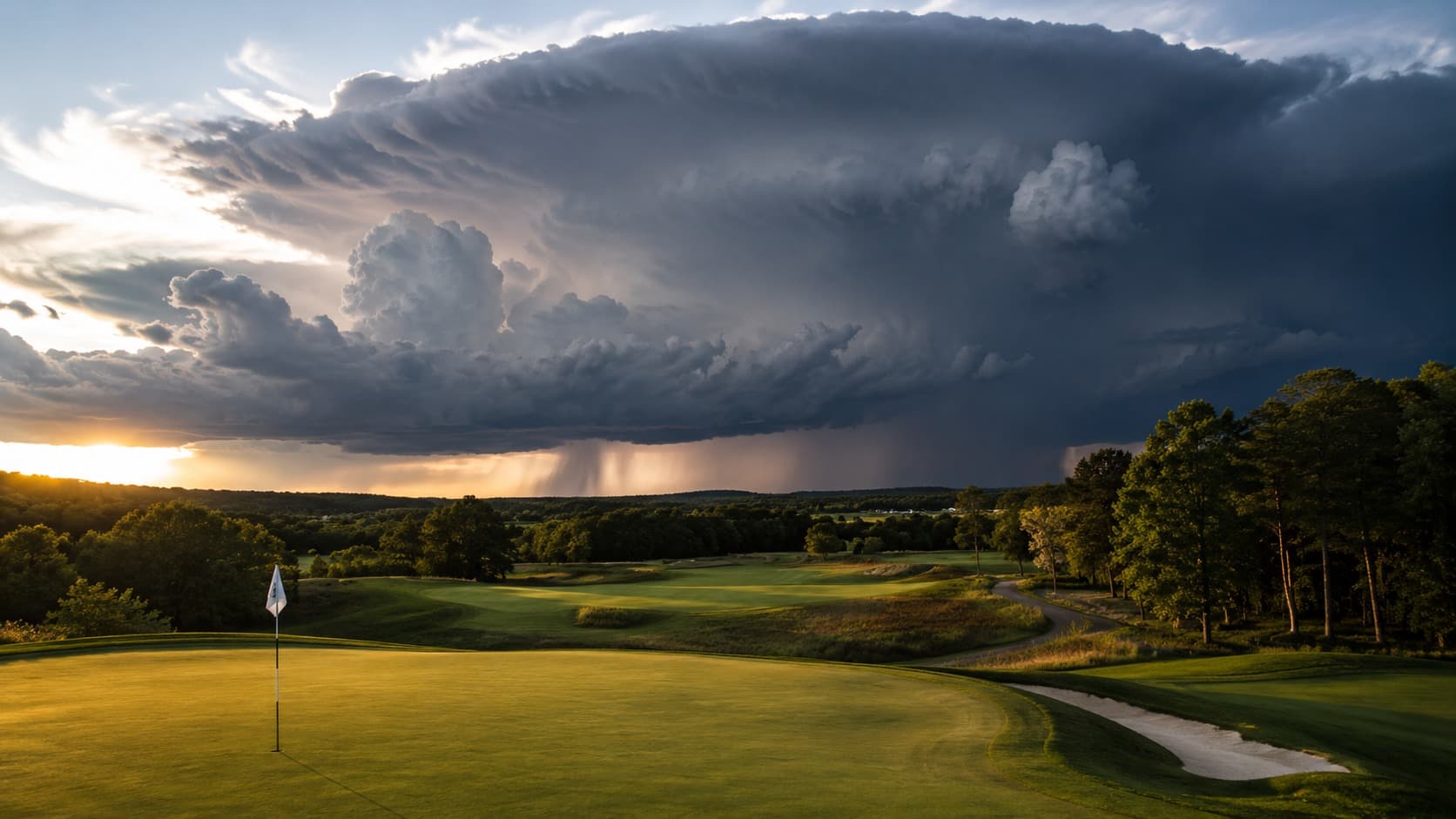
The Three O’Clock Storm: Reading Summer’s Convective Cycle to Protect Your Round
A 40% chance of afternoon thunderstorms does not mean a 40% chance of getting rained on. In the summer convective season it means the morning is nearly clear and the afternoon carries a fast-building, high-energy storm risk driven by a daily heating cycle. Here is the meteorology behind the pattern, the G-Score data on how the storm cycle punishes afternoon tee times across the Southeast, Midwest, and desert Southwest, the lightning-safety decision tree that actually matters, and the workflow that gets you off the course before the first bolt.
Read StoryMinSu Kim
Founder & Golf Data Analyst
MinSu is a data analyst and golfer with 10+ years on the course. He built Golf Weather Score to answer one question: is today a good day to play? He combines weather data, course intelligence, and the proprietary G-Score algorithm to help golfers make smarter decisions.
Every Friday Morning
When Andrews County Golf Course plays best next weekend.
Friday 6am ET: peak G-Score windows for Andrews County Golf Course, wind direction by hour, and one gear call. Three minutes to read, save you the round.
One email a week. Unsubscribe in one click.
The Caddie's Oracle
Draw your luck before the tee off