
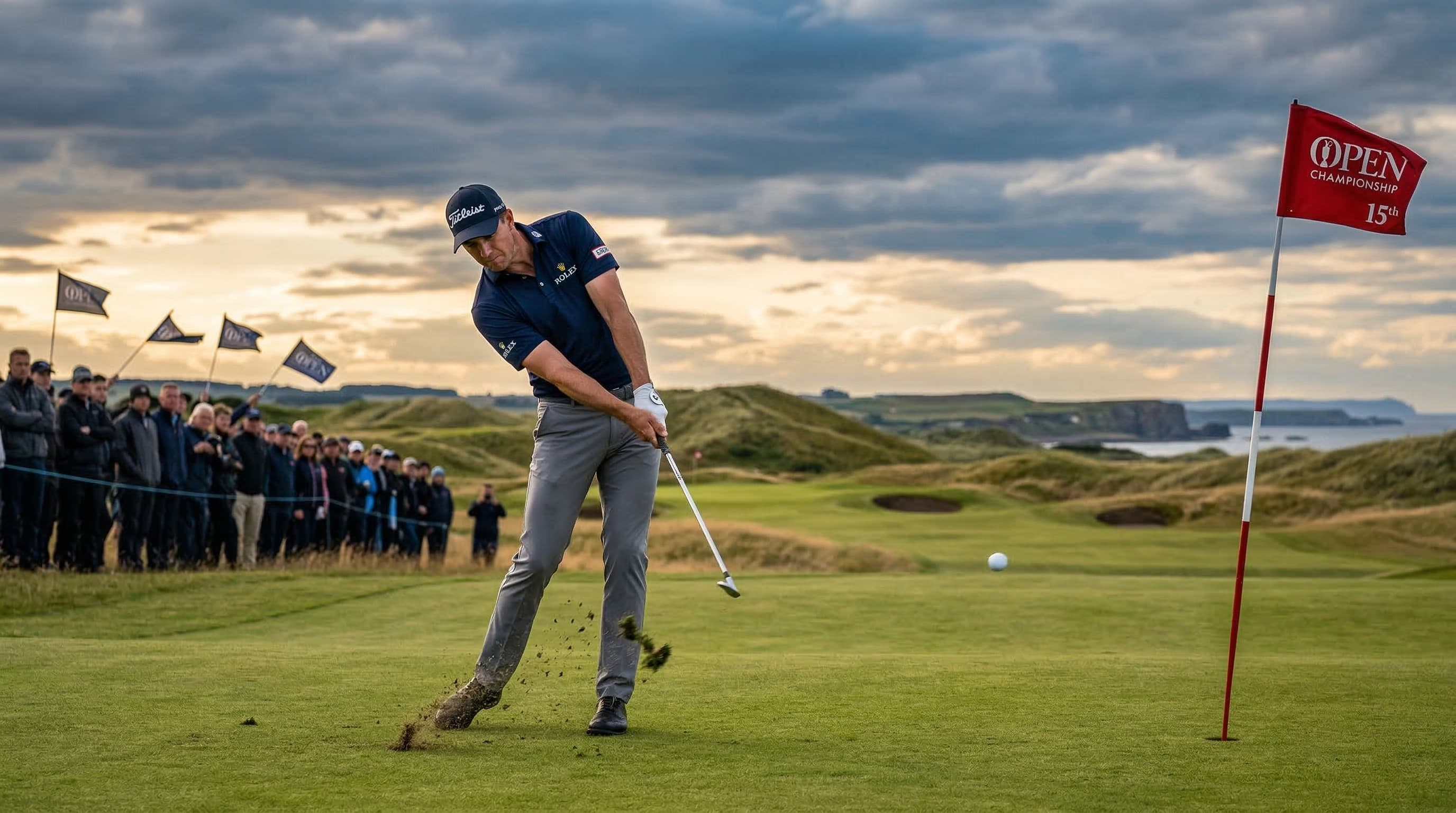
Introduction: When Wind Becomes the True Test of Championship Golf
Golf is played outdoors, and no environmental factor separates elite players from the field more decisively than wind. Throughout the history of professional golf, the most revered tournaments have been defined by how athletes respond to relentless gusts. The Open Championship at St Andrews, where the Old Course's coastal exposure along the North Sea can produce sustained winds of 25-35 mph, has produced legendary wind battles for over 150 years. The AT&T Pebble Beach Pro-Am, perched on the cliffs of the Monterey Peninsula, regularly subjects players to swirling Pacific Ocean winds that can shift direction mid-round. And the AT&T Byron Nelson, held at TPC Craig Ranch in McKinney, Texas, sits on open prairie terrain where spring winds frequently exceed 20 mph, turning a modern parkland course into a strategic puzzle.
These are not isolated examples. According to PGA Tour ShotLink data, roughly 15-20% of all tournament rounds each season are played in conditions where sustained winds exceed 15 mph. In those rounds, the gap between players who have mastered wind strategy and those who have not becomes starkly visible on the leaderboard. This article examines the real data behind wind performance on the PGA Tour, profiles the elite wind players who consistently rise in difficult conditions, breaks down the technical shot-making required to compete in high wind, and provides practical lessons that amateur golfers can apply to their own games.
How Wind Changes Tour Scoring: The Real Numbers
The PGA Tour's ShotLink system, which has tracked every shot on Tour since 2003, provides a remarkably detailed picture of how wind affects scoring. The data is clear: wind is the single most significant weather variable influencing tournament outcomes.
Scoring Average Increases Dramatically
When sustained winds exceed 20 mph, PGA Tour scoring averages increase by 1.5 to 3.0 strokes per round compared to calm conditions. This effect is not linear. At 10-15 mph, the increase is modest, typically 0.5 to 1.0 strokes. But once winds cross the 20 mph threshold, the difficulty compounds. At 25+ mph, as sometimes experienced during Open Championship rounds at venues like Royal Troon or Carnoustie, scoring averages can spike by 3 or more strokes. During the 2022 Open Championship at St Andrews, the Friday afternoon wave experienced significantly stronger winds than the morning wave, and the scoring differential between the two groups was nearly 3 strokes on average.
Driving Accuracy Drops 8-12%
ShotLink data shows that driving accuracy, measured as the percentage of fairways hit, drops by 8-12 percentage points when winds exceed 15 mph. The Tour average for driving accuracy in calm conditions hovers around 62-65%. In winds above 15 mph, that number drops to roughly 52-55%. In winds above 20 mph, some players see their accuracy fall below 50%. This is not simply a matter of the ball being pushed offline. High winds amplify any existing curvature in the ball flight. A shot with 2,500 rpm of sidespin that drifts 5 yards in calm air can drift 15-20 yards in a 20 mph crosswind. That amplification effect is what makes wind so punishing for players with inconsistent face control at impact.
Greens in Regulation Plummets
Perhaps the most telling statistic is the drop in Greens in Regulation (GIR). The Tour average GIR in normal conditions is approximately 66%. When winds exceed 15-20 mph, that number falls to roughly 58%, and in extreme conditions it can dip below 55%. This 8+ percentage point drop translates directly into more scrambling situations, more bogeys, and a premium on short-game skill. The players who maintain their GIR numbers in wind gain an enormous strokes-gained advantage simply by giving themselves more birdie opportunities while the field is grinding for pars.
Scrambling Becomes the Most Important Stat
When GIR drops, scrambling, the ability to save par from off the green, becomes the most predictive stat for tournament success. Mark Broadie's groundbreaking research, published in his 2014 book Every Shot Counts, demonstrated that strokes gained around the green and strokes gained on approach are the two categories most affected by wind. Broadie's analysis showed that in high-wind rounds, the variance in strokes gained around the green nearly doubles compared to calm conditions. This means the separation between the best scramblers and the worst becomes much larger. Players who can get up and down from difficult positions in wind gain 0.5 to 1.0 strokes per round over the field in this category alone. Over four rounds, that advantage can be the difference between winning and missing the cut.
Putting Is Less Affected, But Not Immune
Interestingly, putting statistics are the least affected by wind, though they are not entirely immune. On exposed greens, gusts can affect both the player's stability over the ball and the ball's path on the green, particularly on longer putts. ShotLink data shows that putting averages from outside 20 feet increase by roughly 0.1 to 0.2 strokes per round in high wind. While modest, this effect compounds over a tournament and contributes to the overall scoring increase.
Elite Wind Players: The Pros Who Thrive When It Blows
Not all PGA Tour players are created equal when it comes to wind performance. Certain players have built reputations, backed by data, as elite wind performers. Their success is not accidental. It stems from specific technical attributes, strategic discipline, and in many cases, deliberate practice designed to prepare for difficult conditions.
Tiger Woods: The Inventor of the Modern Stinger
No discussion of wind strategy in professional golf is complete without Tiger Woods. Tiger's famous stinger, a low, penetrating 2-iron shot with minimal trajectory, was not a trick shot or a warm-up drill. It was a deliberately engineered weapon designed specifically for wind control. Tiger developed the shot working with coach Butch Harmon in the late 1990s and early 2000s. The mechanics involved a slightly forward ball position, reduced wrist hinge, a shorter backswing, and an abbreviated follow-through that kept the hands ahead of the clubhead well past impact. The result was a shot that launched at roughly 8-10 degrees with dramatically reduced spin, producing a bullet-like flight that cut through the wind with minimal deviation.
Tiger's wind record speaks for itself. His two Open Championship victories, at St Andrews in 2000 and at Royal Liverpool in 2006, were masterclasses in wind management. At Royal Liverpool, Tiger famously hit driver only once during the entire 72-hole tournament, relying instead on his stinger and long irons to navigate the firm, wind-swept links. He won by two strokes. His ability to control trajectory gave him an estimated 1.5 to 2.0 strokes-gained advantage per round over the field in windy conditions during his prime years.
Rory McIlroy: Raw Power That Defies the Wind
Rory McIlroy approaches wind from a different angle than Tiger. Where Tiger used trajectory manipulation to neutralize wind, Rory uses sheer ball speed to overpower it. McIlroy consistently generates ball speeds above 180 mph with his driver, among the highest on the PGA Tour. This raw speed means his shots spend less time in the air and are less susceptible to wind displacement than shots from players with lower ball speeds. His iron play is similarly powerful. Rory's 7-iron ball speed typically exceeds 120 mph, allowing him to hit the ball on a flatter trajectory with less effort than most Tour players.
McIlroy's wind credentials are extensive. He grew up playing at Holywood Golf Club in Northern Ireland, where wind is a near-constant companion. His 2014 Open Championship victory at Royal Liverpool was played in challenging conditions, and his ball-striking that week was exceptional. Rory has also consistently performed well at the Players Championship at TPC Sawgrass, where March winds off the Atlantic can make the Stadium Course's island greens and water hazards even more perilous. His ability to maintain distance control in wind, losing only 5-8 yards into a 20 mph headwind compared to 10-15 yards for the average Tour player, gives him a significant club-selection advantage.
Collin Morikawa: Precision Under Pressure
Collin Morikawa represents the iron-precision archetype of elite wind play. Morikawa's approach shot dispersion is among the tightest on the PGA Tour, and critically, that dispersion holds up remarkably well in difficult conditions. While many players see their shot scatter increase by 30-40% in winds above 20 mph, Morikawa's dispersion increase is closer to 15-20%, according to ShotLink proximity data. This consistency stems from his exceptionally stable impact conditions. Morikawa's dynamic loft variation, the difference in loft presentation from swing to swing, is among the lowest on Tour, meaning he delivers the club to the ball with remarkable repeatability.
His 2021 Open Championship victory at Royal St George's was a defining wind performance. Morikawa navigated the demanding links layout in mixed conditions, hitting 80% of greens in regulation over the weekend when the field average was closer to 60%. His approach play that week gained him over 8 strokes on the field, a dominant performance driven by his ability to flight the ball precisely even when conditions made distance control extremely difficult for the rest of the field.
Jordan Spieth: Creativity and Trajectory Control
Jordan Spieth is perhaps the most creative wind player on the PGA Tour. Unlike Morikawa's machine-like consistency or McIlroy's power approach, Spieth thrives in wind through improvisation and trajectory manipulation. He is known for his ability to shape shots on demand, hitting low draws, high cuts, and everything in between based on what the wind demands on each individual shot. His caddie, Michael Greller, has spoken extensively about how their yardage discussions in wind involve not just distance but specific trajectory windows, including target apex heights and intended landing angles.
Spieth's 2017 Open Championship victory at Royal Birkdale is one of the great wind-performance stories in modern golf. Trailing by three shots entering the final round, Spieth played the back nine in difficult afternoon wind with extraordinary composure, making five birdies in the final six holes. His short-game wizardry was on full display that week, with his scrambling percentage exceeding 75% in conditions that had the field average below 55%. Spieth's willingness to play unconventional shots, including running the ball along the ground from 50+ yards, bump-and-runs from unusual distances, and creative uses of less-lofted clubs around the greens, gives him options that more conventional players simply do not have in their arsenal.
Tom Watson: The Timeless Links Master
Tom Watson, the five-time Open Championship winner, deserves recognition as perhaps the greatest wind player in golf history. Watson won The Open at Carnoustie (1975), Turnberry (1977), Muirfield (1980), Royal Troon (1982), and Royal Birkdale (1983), amassing his titles across some of the most wind-exposed championship venues in the world. Watson's technique was built for wind golf. He played a naturally lower ball flight, used a firmer grip pressure to maintain control through impact, and was famous for his ability to judge wind speed and direction with uncanny accuracy.
What made Watson exceptional was his decision-making in wind. He understood that links golf in wind required accepting imperfect results. He would aim away from trouble, take the extra club, and trust his ability to scramble when the wind inevitably moved a shot off line. His 2009 Open Championship at Turnberry, where he nearly won at age 59, losing in a playoff to Stewart Cink, demonstrated that his wind mastery had barely diminished over three decades. Watson's scoring average in Open Championship rounds played in winds above 20 mph was approximately 1.5 strokes better than the field average, a gap that few players in any era have matched.
Mark Broadie's Research: The Data Behind Wind Performance
The statistical foundation for understanding wind performance on the PGA Tour owes much to Mark Broadie, the Columbia Business School professor who developed the strokes-gained framework. In Every Shot Counts, Broadie analyzed how different skill categories contribute to scoring in varying conditions. His research found that in calm conditions, long game and putting contribute roughly equally to scoring separation among Tour players. But in high-wind conditions, the balance shifts dramatically. Approach play and short game become approximately 40% more important in explaining scoring differences, while putting's contribution decreases by about 15%. This finding has had a profound influence on how players and coaches prioritize practice before wind-exposed events. It also explains why players like Morikawa (elite approach) and Spieth (elite short game) consistently perform well when the wind blows.
Shot-Making in Wind: The Technical Playbook
Understanding which players excel in wind is one thing. Understanding how they do it requires a deeper look at the specific shot techniques that Tour professionals deploy when conditions deteriorate.
The Knock-Down Shot: Reduced Trajectory Through Forward Shaft Lean
The knock-down shot is the foundational wind technique for any serious golfer. The setup adjustments are straightforward but must be executed precisely. The ball moves 1-2 inches back in the stance. Weight distribution favors the lead foot, typically 55-60% at address. The hands press slightly forward, increasing shaft lean by 3-5 degrees compared to a standard setup. The backswing is shortened to roughly three-quarter length. And the follow-through is abbreviated, with the hands finishing at chest height rather than over the shoulder.
The result of these adjustments is a launch angle reduction of 3-5 degrees and a spin reduction of 500-1,000 rpm compared to a full swing with the same club. For a 7-iron, this might mean launching at 14 degrees instead of 18 degrees, with 5,500 rpm instead of 6,500 rpm. The shot flies lower, penetrates the wind more effectively, and lands on a flatter trajectory, often running out 10-15 yards more than a standard shot. Tour players practice this shot extensively, developing precise distance calibrations so they know exactly how far their knock-down 7-iron travels compared to their standard 7-iron.
The Three-Quarter Punch: One More Club, 75% Effort
The three-quarter punch is an extension of the knock-down philosophy, but with a more aggressive commitment to trajectory control. The technique involves selecting one additional club (for example, a 6-iron instead of a 7-iron for a 160-yard shot into wind), then making a swing at approximately 75% effort. The reduced swing speed lowers both launch and spin simultaneously, creating an even more penetrating ball flight than the standard knock-down.
This technique is particularly effective because it addresses one of the most common mistakes amateurs make in wind: swinging harder. When a player swings harder into a headwind, they typically increase spin rate, which causes the ball to balloon and actually travel a shorter distance. The three-quarter punch does the opposite. By reducing effort, the player maintains a lower spin rate, keeping the ball on a stable trajectory. Tour professionals report that this technique typically reduces carry distance by only 5-8 yards compared to a full swing with the shorter club, while the trajectory improvement can save 10-15 yards of wind-induced distance loss. The net result is often more total distance, not less.
Wind Alignment: Crosswind Aiming Adjustments
Crosswind management is one of the most nuanced aspects of wind strategy. The general rule of thumb used by Tour caddies is approximately 1 yard of lateral drift per mph of crosswind for a 150-yard shot. This means a 15 mph crosswind on a 150-yard approach shot requires aiming approximately 15 yards to the windward side of the target. For longer shots, the drift increases proportionally. A 200-yard shot in the same 15 mph crosswind might drift 20-22 yards.
However, this rule assumes a neutral ball flight. Players who shape the ball into the wind (for example, hitting a draw into a right-to-left wind) will experience less drift because the shot's spin axis partially counteracts the wind force. Conversely, players who shape the ball with the wind (a draw in a left-to-right wind) will see amplified drift. This is why shot-shape selection in crosswinds is so critical. The decision to hold the ball against the wind or ride the wind depends on the player's confidence in their shot shape, the penalty structure around the green, and where the safe miss is located.
Downwind Play: Higher Launch, Less Spin for Maximum Carry
Playing downwind presents a different set of challenges and opportunities. The optimal strategy downwind is counterintuitive for many golfers: launch the ball higher with less spin. A higher launch angle allows the wind to carry the ball farther, while reduced spin prevents the ball from climbing excessively and ballooning. Tour players often achieve this by using a slightly stronger club than needed and making a full, smooth swing rather than a forced, aggressive one.
The distance gains downwind can be dramatic. A 300-yard drive in calm conditions might carry 330-340 yards with a 20 mph tailwind if launched optimally. On approach shots, Tour players routinely take one less club downwind and play for the ball to release on landing. The key is accounting for the reduced stopping power. A shot hit downwind lands at a flatter angle with less backspin, meaning it will roll out significantly more than a shot hit into the wind. Course management downwind therefore requires understanding not just carry distance but total distance, including rollout.
Into the Wind: Lower Launch, Controlled Spin to Minimize the Balloon Effect
The headwind strategy is the inverse of the downwind approach. Into the wind, players want lower launch and carefully controlled spin. The goal is to minimize what is known as the balloon effect, where headwind interacts with backspin to create additional lift, causing the ball to climb higher than intended, lose forward momentum, and fall short of the target. A shot that balloons in a headwind can lose 20-30 yards of carry compared to its calm-air distance.
To combat this, Tour players use the knock-down and punch techniques described above, but they also pay close attention to spin rates. There is a nuance here that separates good wind players from great ones. Reducing spin too much into a headwind can actually be counterproductive, because some spin is needed to maintain a stable ball flight. A shot with very low spin into a strong headwind can become unpredictable, knuckling or darting in flight. The ideal is to reduce spin from the normal range by about 15-25%, not to eliminate it entirely. For example, if a player's standard 7-iron produces 6,500 rpm, the ideal headwind spin rate is roughly 5,000-5,500 rpm, enough to maintain flight stability while preventing the balloon effect.
Club Selection Changes: Specific Examples From the Tour
One of the most practical aspects of wind strategy is understanding how club selection must change in different wind conditions. The adjustments are often more dramatic than amateur golfers realize.
Headwind Club Selection
A shot that measures 150 yards in calm conditions typically calls for a 7-iron for most Tour professionals. Into a 20 mph headwind, that same 150-yard shot now requires a 5-iron. That is a two-club adjustment, and it is not an exaggeration. The headwind reduces carry by 15-25 yards depending on trajectory, and the lower-lofted club is needed to produce the penetrating flight that minimizes additional distance loss from the balloon effect. Some Tour caddies use an even more aggressive formula: one extra club per 10 mph of headwind for short irons, and 1.5 extra clubs per 10 mph for mid and long irons, where the higher launch angles make shots more susceptible to wind.
Crosswind Lateral Drift
Crosswind adds 5-15 yards of lateral drift per 10 mph of wind, depending on the shot distance and trajectory. For a 180-yard shot in a 20 mph crosswind, Tour players routinely aim 20-30 yards to the windward side of their target. On par-3 holes with water or bunkers guarding one side, this adjustment can be the difference between a birdie opportunity and a bogey or worse. The key is not just aiming offline but committing to that aim. Many amateurs aim correctly but then subconsciously steer the club back toward the target during the swing, producing inconsistent results.
The Putter From Off the Green
One of the most underappreciated wind strategies on the PGA Tour is the use of the putter from off the green. In high-wind conditions, Tour players frequently putt from distances of 20 yards or more off the putting surface. This tactic eliminates the risk of a chip shot being affected by wind during its brief airtime. A ball rolling along the ground is essentially immune to wind, making the putter the most predictable club in the bag when conditions are severe.
This strategy is particularly common at links courses during The Open Championship, where tight, firm turf around the greens provides excellent surfaces for long putts. Players like Tiger Woods, Jordan Spieth, and Padraig Harrington have all been observed putting from 30+ yards off the green in Open Championship conditions. The technique requires good green-reading skills extended to the fringe and apron areas, and practice with speed control on longer putts, but it removes the single biggest risk variable: a chipped ball floating unpredictably in a gust.
Driver vs. Fairway Wood Off the Tee
Club selection off the tee also changes dramatically in wind. Into a headwind, many Tour players will switch from driver to 3-wood or even a driving iron. The reasoning is that a driver's higher launch and spin can cause excessive ballooning into a headwind, actually producing less total distance than a 3-wood hit with a lower, more penetrating trajectory. Tiger Woods's approach at the 2006 Open Championship, where he used his driver only once in 72 holes, is the most famous example, but it is common practice on Tour. Conversely, downwind, players may choose to hit driver more aggressively, taking advantage of the tailwind to maximize distance.
Lessons for Amateur Golfers: Practical Wind Strategy
The strategies used by PGA Tour professionals in wind are not reserved for elite athletes. Many of these principles translate directly to amateur play, and implementing even a few of them can save significant strokes during windy rounds.
Lesson 1: Club Up and Swing Easy
This is the single most important wind lesson for amateur golfers, and it is the one most frequently ignored. When hitting into a headwind, take at least one extra club, and often two. Then make a smooth, controlled swing at 75-80% effort. This combination produces a lower trajectory, less spin, and more predictable results. Swinging harder into the wind is the most common mistake amateurs make, and it almost always produces worse results: more spin, higher flight, more ballooning, and shorter distance.
Lesson 2: Aim for the Center of the Green
In wind, the center of the green is your best friend. Tour professionals with world-class skills still aim for the middle of greens in high-wind conditions. For amateurs, this strategy is even more important. A shot that lands in the center of the green, even if it finishes 30 feet from the pin, is almost always a better outcome than a pin-seeking shot that catches a gust and ends up in a bunker or over the green. The goal in windy golf is to minimize big numbers, and aiming for the largest available target does exactly that.
Lesson 3: Keep the Ball on the Ground Around the Greens
Around the greens, favor lower-trajectory shots whenever possible. Use a 7-iron or 8-iron chip-and-run instead of a lob wedge. Use the putter from off the green when the lie and terrain allow it. Every foot the ball spends in the air is a foot where the wind can affect its path. On the ground, the ball goes where you aim it. This is why bump-and-run golf, the style played on links courses for centuries, is so effective in wind. It is not a lack of skill. It is the highest-percentage strategy available.
Lesson 4: Widen Your Stance and Lower Your Center of Gravity
Physical stability is a real concern in high winds. Tour players widen their stance by 2-3 inches in gusty conditions to improve balance. They also flex their knees slightly more and lower their center of gravity. For amateurs, who may already struggle with balance, this adjustment can prevent the swaying and lunging that wind often causes during the swing. A stable base leads to more centered contact, which is the foundation of good wind play.
Lesson 5: Adjust Your Expectations
Perhaps the most important mental adjustment in wind is recalibrating your scoring expectations. If you normally shoot 85, expect to shoot 90-95 in a 20 mph wind. That is not a failure; that is the reality of the conditions. The PGA Tour's best players, who hit the ball better than 99.9% of all golfers, see their scores increase by 1.5-3 strokes in high wind. For amateurs, the effect is proportionally larger. Accepting this reality before you tee off removes the frustration that often leads to poor decisions, forced shots, and compounding errors. Play within yourself, accept pars gratefully, and recognize that a bogey in high wind is not the same as a bogey on a calm day.
Lesson 6: Practice Wind Shots at the Range
Most amateurs never practice wind shots deliberately. The next time you are at the range on a breezy day, instead of fighting the wind, embrace it. Practice your knock-down shots. Experiment with trajectory control. Hit half-swing 6-irons and see how they fly compared to full 8-irons. Developing feel for wind shots requires repetition, and a windy range session is the perfect laboratory. Tour players spend hours practicing these shots before wind-exposed events. Even 30 minutes of deliberate wind practice will give you tools you can deploy the next time conditions get difficult.
How GolfWeatherScore.com G-Score Helps You Prepare for Wind
All of the strategy in the world means little if you arrive at the course unprepared for the conditions you will face. This is exactly where GolfWeatherScore.com and its proprietary G-Score system provide a critical advantage for serious golfers.
The G-Score analyzes real-time and forecasted weather data for golf courses worldwide, including wind speed, wind direction, gusts, and how they change hour by hour throughout your round. Unlike a generic weather app that gives you a single wind reading for your zip code, the G-Score provides golf-specific intelligence. It factors in how wind conditions will affect playability at your specific course, considering terrain exposure, elevation changes, and typical wind patterns.
Before your next round, check your course's G-Score on GolfWeatherScore.com. If the wind component of the score indicates challenging conditions, you can arrive prepared with the right strategy: extra clubs in your bag for headwind holes, a plan for crosswind adjustments, and the mental framework to play patient, center-of-the-green golf. The G-Score transforms weather from an unpleasant surprise into actionable intelligence, exactly the way PGA Tour caddies use weather data to build game plans before every tournament round.
The best golfers in the world do not simply react to wind. They anticipate it, prepare for it, and build strategies around it. With the G-Score, you can do the same. Check your course conditions before every round, and let data-driven preparation give you the same strategic edge that the pros have relied on for decades.
Conclusion: Wind as the Great Equalizer
Wind is the most honest test in golf. It does not care about your handicap, your equipment budget, or your world ranking. It rewards preparation, punishes stubbornness, and reveals the true depth of a golfer's skill set. The PGA Tour data is unambiguous: players who master wind strategy gain measurable, significant advantages over their peers. Tiger Woods built a dynasty partly on his ability to control trajectory. Rory McIlroy uses raw power to minimize wind's effect. Collin Morikawa's precision holds up when others falter. Jordan Spieth's creativity produces solutions that other players cannot imagine. And Tom Watson's five Open Championship titles stand as perhaps the greatest wind resume in the sport's history.
For amateur golfers, the lessons from these elite performers are both clear and achievable. Club up and swing easy. Aim for the center of the green. Keep the ball on the ground around the greens. Widen your stance for stability. Adjust your expectations. And most importantly, prepare before you play. The wind does not have to be your enemy. With the right strategy, the right mindset, and the right preparation tools like the G-Score from GolfWeatherScore.com, windy days can become the rounds where your course management and mental discipline shine brightest. As Mark Broadie's research demonstrates, the shots that matter most in wind are not the spectacular ones. They are the smart ones.