
Caddie's Gear Advisor
Curated for today's 110°F · Clear
Ultralight Distance Drivers
Maximum carry in hot, low-drag conditions
UV Protection Apparel
UPF 50+ cooling fabrics for peak-sun rounds
Precision Rangefinders
Slope-adjusted yardage in any condition
Hydration & Cooling
Insulated bottles and cooling towels
Your Golf Trip, Handled
The Ultimate Golf Trip Planner
Everything you need to play Arizona Traditions Golf Club — from booking your flight to checking in course-side.
Course-Side Stays
Luxury hotels, resorts, and stay-and-play packages just minutes from the first tee.
Flights
Compare fares across 700+ airlines for the best route to your tee time.
SUV Rentals for Golf Bags
Spacious vehicles with room for clubs, bags, and your foursome.
Travel Insurance
Coverage for medical, weather delays, and gear at your destination.
Arizona Traditions Golf Club: Course Intelligence
Signature Setup
Arizona Traditions sits in the far northwest Valley of the Sun, in Surprise, and it plays exactly like a low-desert community course should — flat-footed walking, wide-open sky, and not a single tree to hide behind from the sun. I teed off here on a December morning, 46°F at 7:40 a.m. with frost still on the cart path edges, and by the turn it was already pushing 62°F in full sun. The course opened in 1998 as the regulation layout for the Arizona Traditions active-adult community, designed by Arizona-based architect Ken Kavanaugh. It is not a long course by tour standards — it favors placement and short-game touch over raw power — but the desert washes, the firm winter overseed, and the daily temperature swing make it a real test of how well you read conditions. I'll be honest: I've only played it in the cool season, so my summer notes below lean on Phoenix-area historical climate data rather than my own card.
Hole-by-Hole Wind & Playing Lines
The holes that decide your round here are the longer par-4s and the forced-carry par-3, because the Valley afternoon breeze almost always builds out of the southwest.
- The #1 handicap par-4 (around 410 yards): Into a SW afternoon wind, this hole stretches well past its yardage. I leave the driver in the bag and hit a 3-wood or long iron to find the fairway, then take one extra club on the approach because the breeze knocks down anything hit high.
- The signature par-3 over the wash (mid-160s): Morning calm makes this a comfortable 7-iron; by 1 p.m. into the breeze it becomes a smooth 6 or even 5. The miss is short and right into the desert — bail left toward the fat of the green.
- Closing stretch: The finish tends to play into the prevailing afternoon wind. Keep tee shots low and running on the firm winter fairways rather than flying them high into the gusts.
Green & Fairway Characteristics
In the cool season the fairways are overseeded ryegrass laid over dormant bermuda, and once the morning frost burns off they run firm and fast — a well-struck drive chases noticeably. The bermuda greens roll medium-fast and are mostly gentle in contour, so the danger is speed control more than break: downhill putts get away from you on the firmer winter surfaces. In summer, when the course reverts to pure bermuda and bakes out, both fairways and greens get firmer and faster still. Front and back are similar in character — open, walkable, and demanding precise distance control rather than length.
Seasonal Weather Pattern
Surprise is true low Sonoran Desert. From October through April — the playable prime season — daytime highs sit in the 65–80°F range with dry air and big diurnal swings; a December round can start near 45°F and warm 20 degrees before you finish. July and August are brutal: highs routinely top 105–110°F, and the late-summer monsoon brings sudden afternoon thunderstorms and dust-laden gusts that can shut a round down with little warning. Spring and fall mornings are the sweet spot — cool, calm, and firm.
Local Play Tips
This is a course that rewards getting out the door early. The active-adult crowd fills the morning sheet fast, so book ahead. Carry more water than you think you need even in winter — desert air dehydrates you without the sweat to warn you. And don't over-club on early holes when the air is cold and dense: a 46°F morning ball carries shorter, but as the temperature climbs through the round your same swing will fly several yards farther by the back nine, so recheck your numbers at the turn.
Pre-Round Weather Workflow
Check the 7-day G-Score for Surprise, Arizona, two or three days out, then again the night before. The two numbers that matter most here are temperature swing and windExposure. In the cool season, the earliest tee windows score 10–15 points higher on the G-Score than midday — you beat both the building southwest breeze and the afternoon heat. In summer, watch the monsoon forecast closely: if the afternoon storm probability climbs, take the first available time and plan to be done before noon. Pair the G-Score with the wind-direction forecast — a SW reading means the long par-4s and the closing holes will play their hardest, so plan to flight it low and club up before you reach the first tee.
Related Reading
Before you tee off at Arizona Traditions Golf Club

Best Golf Weather by State: Ranking America by Average G-Score
We ranked all 50 US states by average G-Score golf playability. California tops the list, but the results beyond the top five may surprise you.
Read Story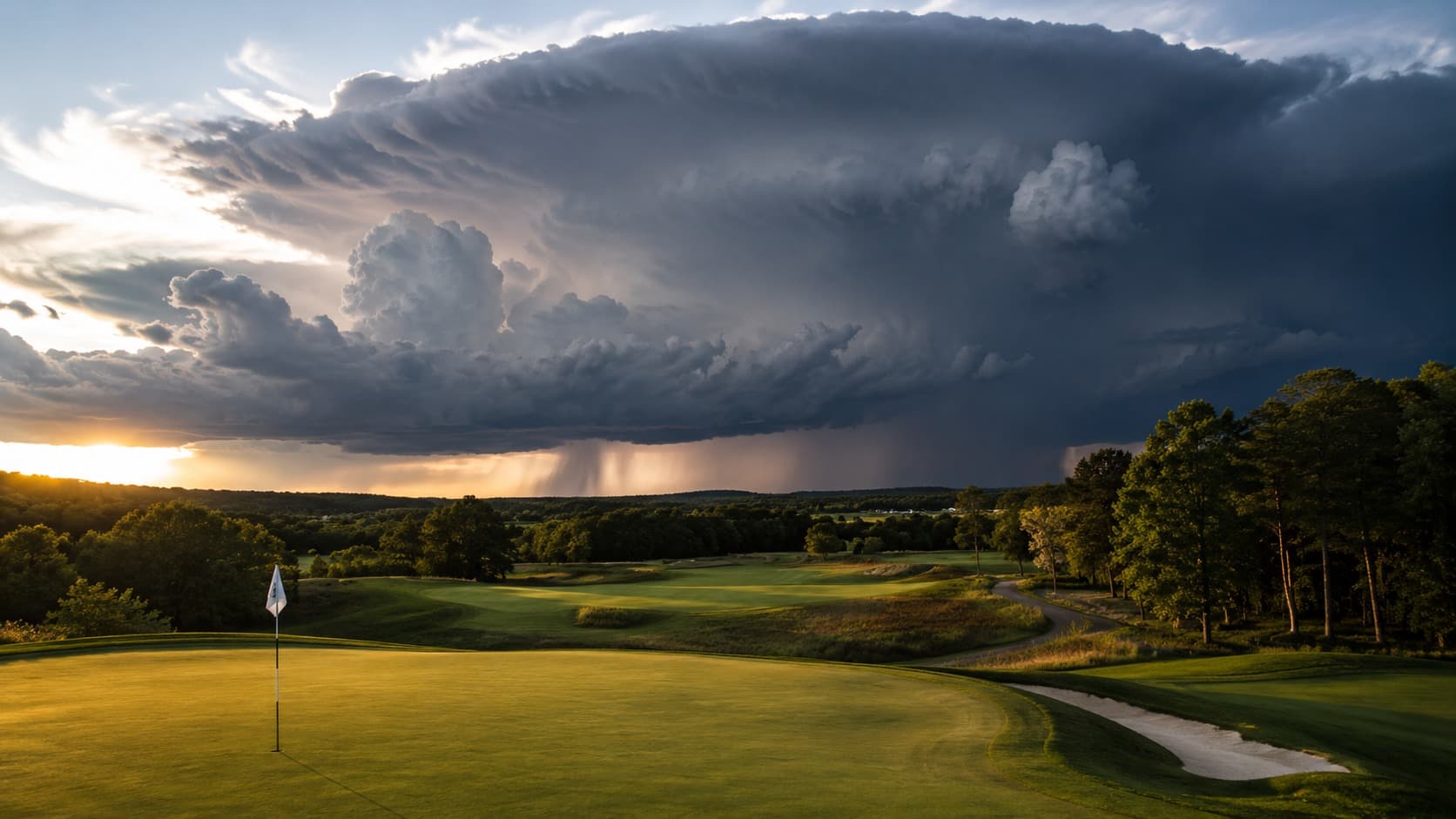
The Three O’Clock Storm: Reading Summer’s Convective Cycle to Protect Your Round
A 40% chance of afternoon thunderstorms does not mean a 40% chance of getting rained on. In the summer convective season it means the morning is nearly clear and the afternoon carries a fast-building, high-energy storm risk driven by a daily heating cycle. Here is the meteorology behind the pattern, the G-Score data on how the storm cycle punishes afternoon tee times across the Southeast, Midwest, and desert Southwest, the lightning-safety decision tree that actually matters, and the workflow that gets you off the course before the first bolt.
Read StoryMinSu Kim
Founder & Golf Data Analyst
MinSu is a data analyst and golfer with 10+ years on the course. He built Golf Weather Score to answer one question: is today a good day to play? He combines weather data, course intelligence, and the proprietary G-Score algorithm to help golfers make smarter decisions.
Every Friday Morning
When Arizona Traditions Golf Club plays best next weekend.
Friday 6am ET: peak G-Score windows for Arizona Traditions Golf Club, wind direction by hour, and one gear call. Three minutes to read, save you the round.
One email a week. Unsubscribe in one click.
The Caddie's Oracle
Draw your luck before the tee off