
Caddie's Gear Advisor
Curated for today's 55°F · Clouds
Tour-Level Drivers
Engineered for maximum distance and forgiveness
Laser Rangefinders
Pin-seeking technology for precision approaches
Premium Golf Balls
Tour-caliber spin and distance performance
Performance Sunglasses
Polarized lenses optimized for reading greens
Your Golf Trip, Handled
The Ultimate Golf Trip Planner
Everything you need to play Bear Valley Golf Course — from booking your flight to checking in course-side.
Course-Side Stays
Luxury hotels, resorts, and stay-and-play packages just minutes from the first tee.
Flights
Compare fares across 700+ airlines for the best route to your tee time.
SUV Rentals for Golf Bags
Spacious vehicles with room for clubs, bags, and your foursome.
Travel Insurance
Coverage for medical, weather delays, and gear at your destination.
Bear Valley Golf Course: Course Intelligence
Signature Setup
Bear Valley Golf Course sits on Kodiak Island, Alaska, at roughly 57° North — one of the most remote regulation courses in the United States. It opened in 1986, a nine-hole layout credited to Richard L. Blackburn and Wayne Berry: par 36, 2,805 yards from the back tees and 2,427 from the forward set, with a course rating of 67.8 and a slope of 121. I want to be honest up front — I live in Irvine and I have not played Kodiak. Everything here is built from the scorecard, NOAA climate records for the island, and twenty years of playing wind-exposed maritime golf elsewhere. The signature of this place isn't a manufactured island green; it's the weather. On Kodiak the wind and rain are the architect that finishes every hole.
Hole-by-Hole Wind & Playing Lines
The numbers say this is a short course. Kodiak's prevailing southeast maritime flow says otherwise. A 150-yard approach into a steady 20-mph headwind plays closer to 185 here, and the island regularly sees gusts well past that off the Gulf of Alaska.
The exposed par-3s are the pivot. A hole that measures 150 on the card can demand a 6-iron one day and a hard 4-iron the next, same pin. Don't trust the yardage marker — trust the flag and the treeline.
On the longest par-5, the smart play into the SE wind is three shots, not a hero second. Wet turf kills roll-out and a soggy headwind eats carry, so lay back and leave yourself a full wedge rather than a half-swing knockdown you can't control.
Green & Fairway Characteristics
These are northern maritime greens — fescue and bent that stay soft and run slow because the surface is wet far more often than it's dry. That cuts both ways: approaches hold, but putts that look quick break less and die early, so be willing to hit it firmly at the cup. Fairways drain slowly; expect plugged lies and mud balls after rain, and play for a flyer or a dead-stop, rarely a clean release. With only nine holes (played twice for 18), you learn the lines fast — the variable is never the routing, it's how hard it's blowing on the second loop.
Seasonal Weather Pattern
Kodiak's season is short and damp. The playable window is roughly May through September; the island averages around 76 inches of rain a year and more than 200 wet days, among the cloudiest, wettest climates in North America. Summer highs sit in the mid-50s to low-60s°F even in July, and the wind almost never fully quits. This is not Southern California golf — bring genuine waterproofs, not a windbreaker, and expect to play in a drizzle that locals don't even count as rain.
Local Play Tips
The counterintuitive move on Kodiak is to skip the early tee time. Mornings here often start under fog and the residue of an overnight system, with the turf at its wettest. Many summer days deliver a calmer, brighter early-afternoon lull before the evening front rebuilds the wind — that's your window for the best scoring conditions and the firmest the fairways will get. And carry a dry towel sealed in a bag; keeping your grips usable is half the battle on a wet island round.
Pre-Round Weather Workflow
Check the 7-day G-Score for Bear Valley the night before and again at dawn. On Kodiak the daily spread is enormous, so prioritize the slot with the highest score rather than defaulting to the first tee time. Watch the windExposure rating closely — it most affects the open par-3s and the long par-5 into the prevailing SE flow. If the G-Score climbs in the early afternoon as fog and overnight rain clear, that's your signal: take the midday slot, accept the wet fairways, and play for a forecast wind that's easing rather than building.
Sources: course data and scorecard via GolfLink and 18Birdies; island climate via NOAA Kodiak station records.
More Courses in Alaska
View AllRelated Reading
Before you tee off at Bear Valley Golf Course

Best Golf Weather by State: Ranking America by Average G-Score
We ranked all 50 US states by average G-Score golf playability. California tops the list, but the results beyond the top five may surprise you.
Read Story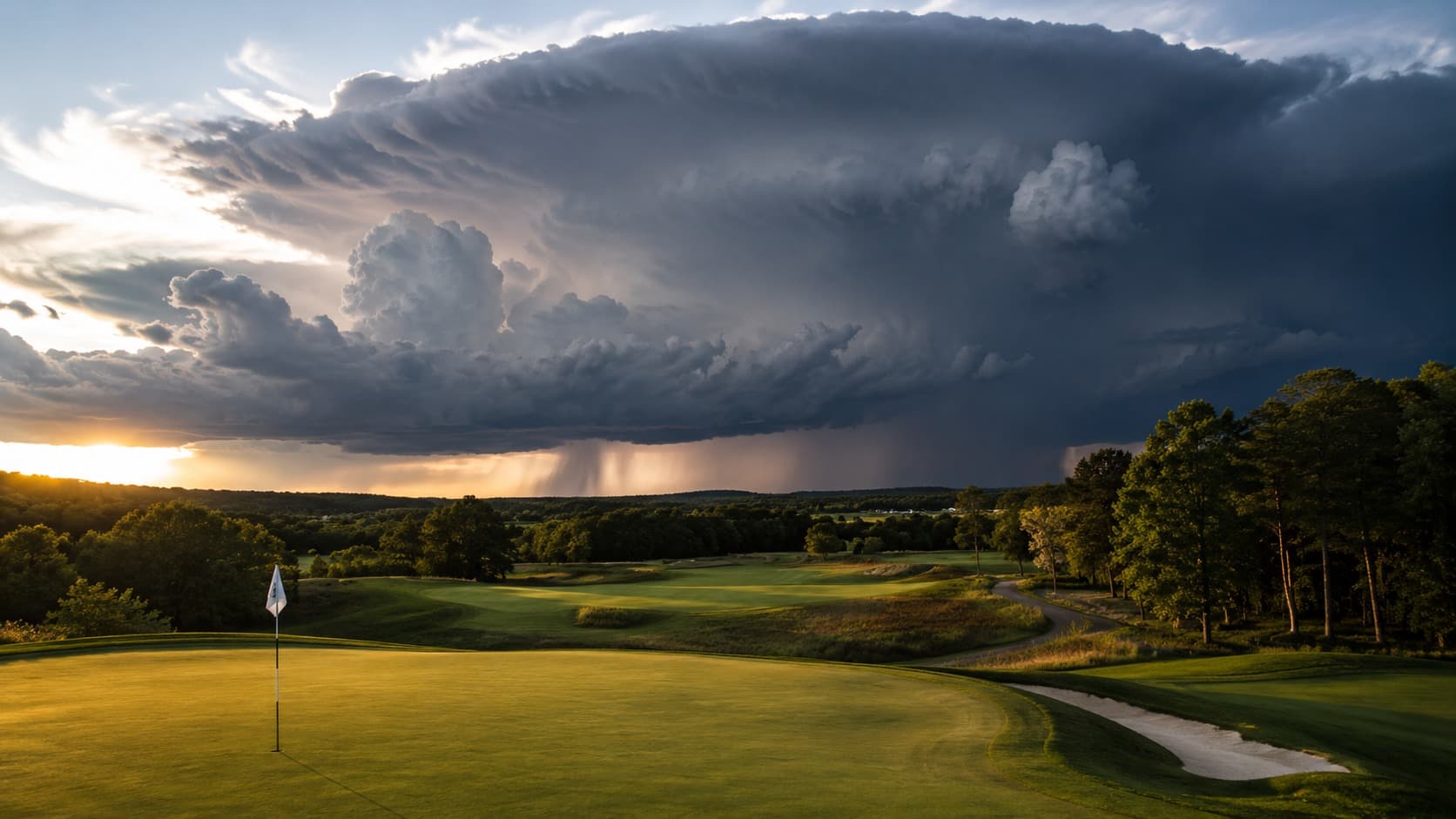
The Three O’Clock Storm: Reading Summer’s Convective Cycle to Protect Your Round
A 40% chance of afternoon thunderstorms does not mean a 40% chance of getting rained on. In the summer convective season it means the morning is nearly clear and the afternoon carries a fast-building, high-energy storm risk driven by a daily heating cycle. Here is the meteorology behind the pattern, the G-Score data on how the storm cycle punishes afternoon tee times across the Southeast, Midwest, and desert Southwest, the lightning-safety decision tree that actually matters, and the workflow that gets you off the course before the first bolt.
Read StoryMinSu Kim
Founder & Golf Data Analyst
MinSu is a data analyst and golfer with 10+ years on the course. He built Golf Weather Score to answer one question: is today a good day to play? He combines weather data, course intelligence, and the proprietary G-Score algorithm to help golfers make smarter decisions.
Every Friday Morning
When Bear Valley Golf Course plays best next weekend.
Friday 6am ET: peak G-Score windows for Bear Valley Golf Course, wind direction by hour, and one gear call. Three minutes to read, save you the round.
One email a week. Unsubscribe in one click.
The Caddie's Oracle
Draw your luck before the tee off