
Caddie's Gear Advisor
Curated for today's 82°F · Clouds
Tour-Level Drivers
Engineered for maximum distance and forgiveness
Laser Rangefinders
Pin-seeking technology for precision approaches
Premium Golf Balls
Tour-caliber spin and distance performance
Performance Sunglasses
Polarized lenses optimized for reading greens
Your Golf Trip, Handled
The Ultimate Golf Trip Planner
Everything you need to play Brownsville Golf Center — from booking your flight to checking in course-side.
Course-Side Stays
Luxury hotels, resorts, and stay-and-play packages just minutes from the first tee.
Flights
Compare fares across 700+ airlines for the best route to your tee time.
SUV Rentals for Golf Bags
Spacious vehicles with room for clubs, bags, and your foursome.
Travel Insurance
Coverage for medical, weather delays, and gear at your destination.
Brownsville Golf Center: Course Intelligence
Signature Setup
Brownsville is as far south as you can golf in Texas before you hit the Rio Grande, and the first thing the wind tells you at the tee is that the Gulf of Mexico is only about 20 miles east. Brownsville Golf Center is the city's municipal golf complex — an 18-hole course paired with a lighted driving range and practice area, serving the southern tip of the Rio Grande Valley.
I won't dress it up as a championship destination. It is a flat, walkable municipal layout built for everyday play, and I haven't been able to confirm the original architect or the year it opened — that record isn't publicly documented, and I'd rather say so than put a fake name on it. What makes this course genuinely interesting to a serious golfer is not pedigree. It's that Brownsville is one of the windiest places to play golf in Texas, and almost every shot here is a wind decision.
Hole-by-Hole Wind & Playing Lines
The course is flat and open, so wind — not slope or trees — is the entire defense. The prevailing flow in the Rio Grande Valley is a persistent SE breeze straight off the Gulf, and it is the single most important read of the day.
On the longest par-4s that run into that SE wind, a 410-yard hole effectively plays 440-plus. A stock 150-yard 8-iron approach becomes a 175-yard 6-iron, and a flighted-down ball holds its line where a high shot balloons and falls short right. On the holes that turn back with the wind at your back, the same 150 yards drops to a soft 9-iron, and the common mistake is flying the firm Bermuda green long. The third pattern is the winter front: a few times each season a cold NW norther swings the wind 180 degrees and drops the temperature 20–30°F in an afternoon, which completely reverses which holes play long.
Green & Fairway Characteristics
Expect warm-season Bermuda turf throughout. In the dry winter stretch the fairways run firm and the greens get quick, so a low driving ball flight gets meaningful roll into the wind — an advantage on a course where carry distance is constantly being eaten by the breeze. The site has little elevation change, which keeps the layout walkable but also means there is nothing to block or soften the Gulf wind on any hole. Plan to land approaches short and let the ball release on the firm surfaces rather than trying to fly the flag.
Seasonal Weather Pattern
Brownsville's subtropical climate makes it a winter golf town, not a summer one. NOAA climate records for the Brownsville/South Padre area put July–August afternoon highs near 95°F with very high humidity, pushing the heat index well past 100°F by midday. Winter is the sweet spot: December–February daytime highs typically run 68–74°F, which is why the Valley fills with snowbirds. What stays constant year-round is wind — Brownsville averages roughly 11–12 mph annually, among the highest sustained wind of any Texas city, with spring (March–May) the gustiest stretch.
Local Play Tips
Treat this as a wind-management course first and a scorecard second. The most valuable thing you can do here is use the lighted range before your round to groove a low, controlled flight — there is no better local laboratory for it than a place where the Gulf breeze is this dependable. Because the facility is municipal, green fees are budget-friendly, which makes it a low-stakes place to practice playing into a real wind rather than a calm range. Call ahead to confirm current rates and twilight hours, and in summer book the earliest slot available — the difference between a dawn round and a noon round here is the difference between comfortable and brutal.
Pre-Round Weather Workflow
Before you drive over, pull the 7-day G-Score and check the windExposure rating for the Brownsville area. Two readings matter most. First, wind direction: a SE reading is the default Gulf flow — the long holes into it play a club-and-a-half longer, the downwind holes a club shorter, so plan club selection hole by hole. A NW reading means a winter norther has arrived; expect colder, drier, and a full reversal of which holes are hard. Second, time of day: in the warm months the sea breeze strengthens through the late morning and the heat index spikes, so an early tee time scores far better than an afternoon one. If the forecast shows sustained 18+ mph wind, bring two extra clubs of range and leave the high driver at home.
Related Reading
Before you tee off at Brownsville Golf Center

PGA Tour Wind Strategy: How Pros Attack Windy Conditions
Real PGA Tour stats reveal how elite players like Tiger Woods, Rory McIlroy, and Collin Morikawa dominate windy conditions with proven strategies.
Read Story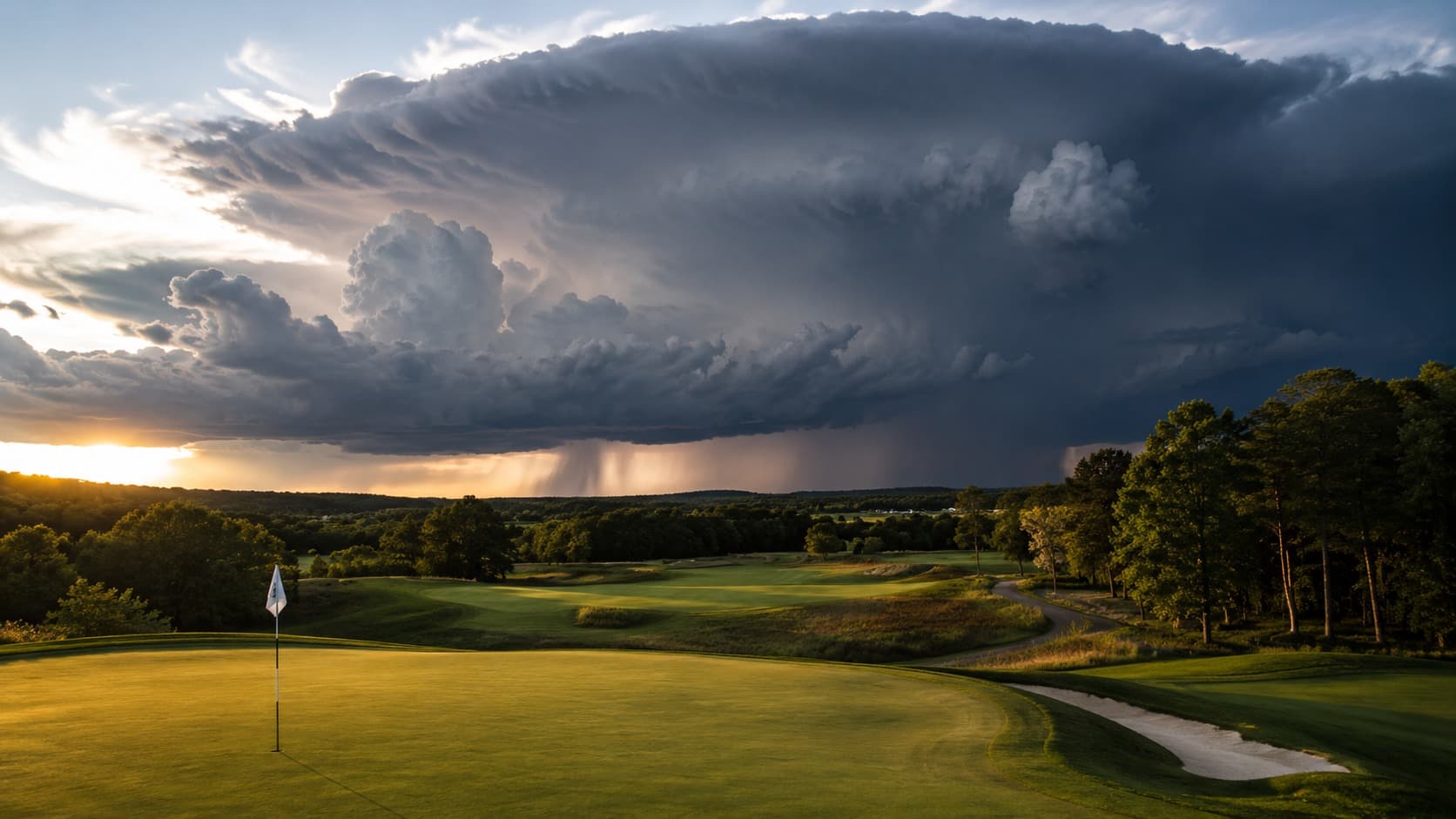
The Three O’Clock Storm: Reading Summer’s Convective Cycle to Protect Your Round
A 40% chance of afternoon thunderstorms does not mean a 40% chance of getting rained on. In the summer convective season it means the morning is nearly clear and the afternoon carries a fast-building, high-energy storm risk driven by a daily heating cycle. Here is the meteorology behind the pattern, the G-Score data on how the storm cycle punishes afternoon tee times across the Southeast, Midwest, and desert Southwest, the lightning-safety decision tree that actually matters, and the workflow that gets you off the course before the first bolt.
Read StoryMinSu Kim
Founder & Golf Data Analyst
MinSu is a data analyst and golfer with 10+ years on the course. He built Golf Weather Score to answer one question: is today a good day to play? He combines weather data, course intelligence, and the proprietary G-Score algorithm to help golfers make smarter decisions.
Every Friday Morning
When Brownsville Golf Center plays best next weekend.
Friday 6am ET: peak G-Score windows for Brownsville Golf Center, wind direction by hour, and one gear call. Three minutes to read, save you the round.
One email a week. Unsubscribe in one click.
The Caddie's Oracle
Draw your luck before the tee off