
Caddie's Gear Advisor
Curated for today's 61°F · Mist
Tour-Level Drivers
Engineered for maximum distance and forgiveness
Laser Rangefinders
Pin-seeking technology for precision approaches
Premium Golf Balls
Tour-caliber spin and distance performance
Performance Sunglasses
Polarized lenses optimized for reading greens
Your Golf Trip, Handled
The Ultimate Golf Trip Planner
Everything you need to play Brunswick Golf Club — from booking your flight to checking in course-side.
Course-Side Stays
Luxury hotels, resorts, and stay-and-play packages just minutes from the first tee.
Flights
Compare fares across 700+ airlines for the best route to your tee time.
SUV Rentals for Golf Bags
Spacious vehicles with room for clubs, bags, and your foursome.
Travel Insurance
Coverage for medical, weather delays, and gear at your destination.
Brunswick Golf Club: Course Intelligence
Signature Setup
I played Brunswick on an early October morning two years ago, gloved up at 7:40 a.m. with the thermometer reading 46°F and frost still in the rough shadows. By the turn it was shirt-sleeve weather. That swing — cold, still dawn into a breezy, mild afternoon — is the whole story of a round in coastal Maine, and it's why I keep coming back to this one.
Brunswick Golf Club is one of Maine's older courses, with roots going back to 1900, and the 18-hole layout that exists today is generally credited to New England architect Wayne Stiles in the 1920s expansion. It's a classic-era parkland design: tree-lined corridors, modestly sized greens, and ground that rewards position over raw distance. This isn't a stretched-out modern bomber's course — it's a placement test, and the weather is the variable that turns a comfortable approach into an awkward one.
Hole-by-Hole Wind & Playing Lines
The #1 stroke-index par-4. This is the hole that decides your card. On a steady southwest sea breeze off Casco Bay — common from late morning on through summer afternoons — the approach plays noticeably longer than the yardage on the card. I hit one more club than the number says here every time the flag is standing out. The trees pinch both sides near the green, so the smart miss is long and to the fat side, never short and short-sided into the pines.
A short, tree-framed par-4 (the signature). The temptation is driver; the correct play is a positioning club. The fairway tilts toward the trees, and on a helping down-breeze a big drive runs out into trouble rather than down the short grass. Lay back to a full wedge number, take the slope out of play, and you've turned a card-wrecker into a birdie look.
A mid-length par-3 exposed to the prevailing wind. With nothing to block the breeze, this one swings two clubs between a calm dawn and a filled-in afternoon wind. Read the flag, not the forecast — and aim for the center of the green, because the run-offs here punish the short-sided guess.
Green & Fairway Characteristics
The greens are cool-season surfaces — bent and poa — that run firm and true in the fall and a touch softer and slower after summer rain. They're not enormous, which puts a premium on distance control: a 150-yard approach that's pure carry into a breeze can come up a full club short and trickle off the front. The fairways thread through mature trees, so wind direction matters less than wind exposure — some corridors are sheltered and play dead calm while the open holes alongside them are taking the full sea breeze. Expect uneven, parkland lies and plan your stock yardages to lose a little to the slope, not hold perfectly flat.
Seasonal Weather Pattern
Brunswick sits in midcoast Maine, and the honest golf calendar runs roughly May through October. Summer mornings often open in the 50s–60s°F and climb into the comfortable 70s–low 80s by afternoon, with the southwest sea breeze off Casco Bay filling in reliably after midday. Spring and fall mornings can start near or below 45°F, with frost delays a real possibility in October. Mid-summer humidity keeps the turf softer and holding; the firmest, fastest conditions I've seen here come in a dry, cool fall stretch. The defining weather signal isn't a storm — it's that daily sea-breeze cycle, which turns a calm front nine into a wind-defended back nine almost every clear afternoon.
Local Play Tips
Here's the read worth knowing: the sea breeze here is a clock, not a coin flip. On clear summer days the bay breeze builds in the early afternoon and strengthens through the round, so the back nine you play at 2 p.m. is a genuinely harder, longer golf course than the front you played at noon. If you can choose your time, take the early one — a dawn round on still air plays a full club shorter on the exposed holes than the same holes do after the breeze sets up. And in October, call ahead about frost delays before you drive out; the low, shaded corners hold frost well after the open fairways have cleared.
Pre-Round Weather Workflow
Use the 7-day G-Score on this course page the way I prep for a midcoast Maine round. The day before, check the afternoon wind trend: a building southwest reading is your signal that the exposed holes and the #1 stroke-index par-4 will play long after midday, so plan to be aggressive early and conservative late. The morning of, open the windExposure panel — sheltered, tree-lined corridors will show low exposure and play near calm, while the open holes show the full sea breeze; club accordingly hole by hole rather than trusting one number for the whole round. If the dawn G-Score shows temperatures below 50°F, expect one less club of carry on the early holes and, in fall, leave margin for a frost delay before your first tee time.
Related Reading
Before you tee off at Brunswick Golf Club

The May 2026 G-Score Heatmap: Where American Golf Peaks This Spring
May is the most underrated month on the American golf calendar. Five regions hit their annual peak this spring, three turn quietly hostile, and the data tells a clearer story than the brochures. Here is where to play, where to avoid, and how to time your booking window.
Read Story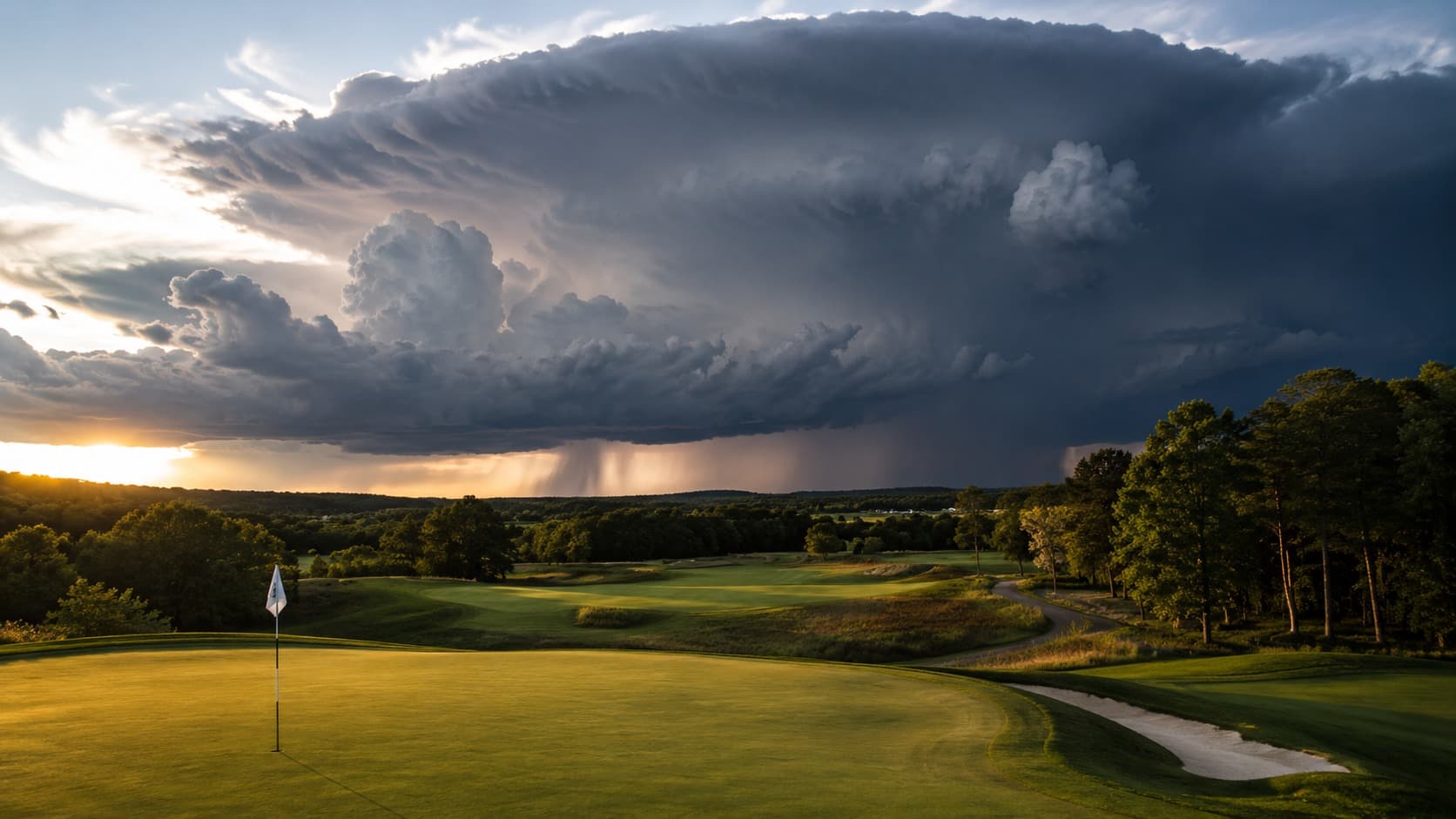
The Three O’Clock Storm: Reading Summer’s Convective Cycle to Protect Your Round
A 40% chance of afternoon thunderstorms does not mean a 40% chance of getting rained on. In the summer convective season it means the morning is nearly clear and the afternoon carries a fast-building, high-energy storm risk driven by a daily heating cycle. Here is the meteorology behind the pattern, the G-Score data on how the storm cycle punishes afternoon tee times across the Southeast, Midwest, and desert Southwest, the lightning-safety decision tree that actually matters, and the workflow that gets you off the course before the first bolt.
Read StoryMinSu Kim
Founder & Golf Data Analyst
MinSu is a data analyst and golfer with 10+ years on the course. He built Golf Weather Score to answer one question: is today a good day to play? He combines weather data, course intelligence, and the proprietary G-Score algorithm to help golfers make smarter decisions.
Every Friday Morning
When Brunswick Golf Club plays best next weekend.
Friday 6am ET: peak G-Score windows for Brunswick Golf Club, wind direction by hour, and one gear call. Three minutes to read, save you the round.
One email a week. Unsubscribe in one click.
The Caddie's Oracle
Draw your luck before the tee off