
Caddie's Gear Advisor
Curated for today's 62°F · Mist
Tour-Level Drivers
Engineered for maximum distance and forgiveness
Laser Rangefinders
Pin-seeking technology for precision approaches
Premium Golf Balls
Tour-caliber spin and distance performance
Performance Sunglasses
Polarized lenses optimized for reading greens
Your Golf Trip, Handled
The Ultimate Golf Trip Planner
Everything you need to play Bucksport Golf Club — from booking your flight to checking in course-side.
Course-Side Stays
Luxury hotels, resorts, and stay-and-play packages just minutes from the first tee.
Flights
Compare fares across 700+ airlines for the best route to your tee time.
SUV Rentals for Golf Bags
Spacious vehicles with room for clubs, bags, and your foursome.
Travel Insurance
Coverage for medical, weather delays, and gear at your destination.
Bucksport Golf Club: Course Intelligence
Signature Setup
I have not played Bucksport Golf Club in person, so I'll be honest about what comes from regional knowledge and what I can't verify. The course sits in Bucksport, Maine, on the lower Penobscot River where it widens toward Penobscot Bay — a small-town community club, not a resort or signature-architect build. I have not found a documented architect of record, so I won't attach a famous name to it; treat it as a long-standing club layout that grew with the town rather than a designed showpiece. What I can speak to with confidence is the setting: a tidal-river site in Down East Maine where the maritime weather, more than any single bunker or dogleg, sets the daily scoring ceiling. The hole that decides most rounds is the river-exposed one every coastal layout has — where the sea breeze, not the scorecard, writes the number.
Hole-by-Hole Wind & Playing Lines
Because I haven't walked the specific holes, I'll frame this by the wind logic that governs a lower-Penobscot layout rather than invent yardages I can't confirm.
- The #1 stroke-index par-4: Coastal Maine's afternoon flow turns onshore from the southwest as the land heats and the bay stays cool. Into that SW sea breeze, the longest par-4 plays a full club longer than the card — a 400-yard hole eats like 425. Take the extra club off the tee and accept the longer approach instead of over-swinging into the breeze.
- A river-side par-3: Bay-line one-shotters get a quartering crosswind straight off the water. On a SW afternoon it pushes left-to-right for a right-hander; aim at the fat of the green, not the flag, and let the wind feed the ball in.
- A sheltered, tree-lined hole: Not every hole is exposed — the inland, wooded holes sit out of the breeze and play to their honest yardage. The trap is carrying your wind club from the open holes into the calm ones and flying the green. Recalibrate when the trees close in.
Green & Fairway Characteristics
Expect a cool-season maritime setup: bentgrass and poa annua greens with bluegrass-rye fairways. The defining variable is firmness, and on the coast it swings with both calendar and fog. In a dry August the fairways run firm and the greens take a confident release; after a stretch of coastal fog or spring rain the same turf plays soft and slow, holding spin and adding length off the tee. River-bottom ground near tidewater also holds morning dew and damp longer than an inland course, so early approaches release less than a mid-afternoon ball off dried-out turf. I haven't putted these greens, so I won't claim a break tendency — read them fresh, but expect pace and grain to lean toward the lower, river side of the property.
Seasonal Weather Pattern
Bucksport sits in a cool maritime stretch of the humid-continental zone, moderated by Penobscot Bay. The playing season is short and weather-bracketed: roughly May through October, with the turf dormant or the course closed from late November into April. July and August daytime highs typically sit in the high-70s to low-80s °F — cooler than inland Maine because the bay caps the heat — but those same summer afternoons bring the most reliable SW sea breeze. Spring (April–May) is the wet, foggy window: soft greens, longer-playing fairways, and morning fog that can delay visibility off exposed tees. The most dependable scoring weather is a calm, clear morning in late August or September — firm fairways, cool air, and the bay briefly still before the onshore breeze builds.
Local Play Tips
One thing a booking page won't tell you about a lower-Penobscot course: the calm-morning-to-sea-breeze swing is the whole game here. On a typical summer day the bay is glassy at dawn and the wind is up by early afternoon as the onshore breeze fills in — so the genuinely good scoring conditions live in the early-to-mid morning before the breeze arrives. That timing matters more than club selection on any single hole. Lock your tee time to the wind forecast, not the other way around. And watch the fog: a foggy coastal morning can hang on the river holes well past sunrise, so a slightly later-than-dawn slot on a foggy day can actually play clearer than the first tee time.
Pre-Round Weather Workflow
Use the 7-day G-Score forecast on this course page before you book. For Bucksport, the highest-leverage variable is the sea-breeze timing: check the windExposure rating and the hour-by-hour wind for the afternoon. If the forecast shows a calm morning building to an above-average SW breeze by early afternoon, target the earliest comfortable slot — you play the open river holes while the bay is still and bank strokes before the wind costs you a club on every exposed approach. In spring, also watch the fog and precipitation bands: a wet or foggy card means soft, longer-playing fairways and minimal release, so club up off the tee and don't expect the ground to help.
Related Reading
Before you tee off at Bucksport Golf Club

The May 2026 G-Score Heatmap: Where American Golf Peaks This Spring
May is the most underrated month on the American golf calendar. Five regions hit their annual peak this spring, three turn quietly hostile, and the data tells a clearer story than the brochures. Here is where to play, where to avoid, and how to time your booking window.
Read Story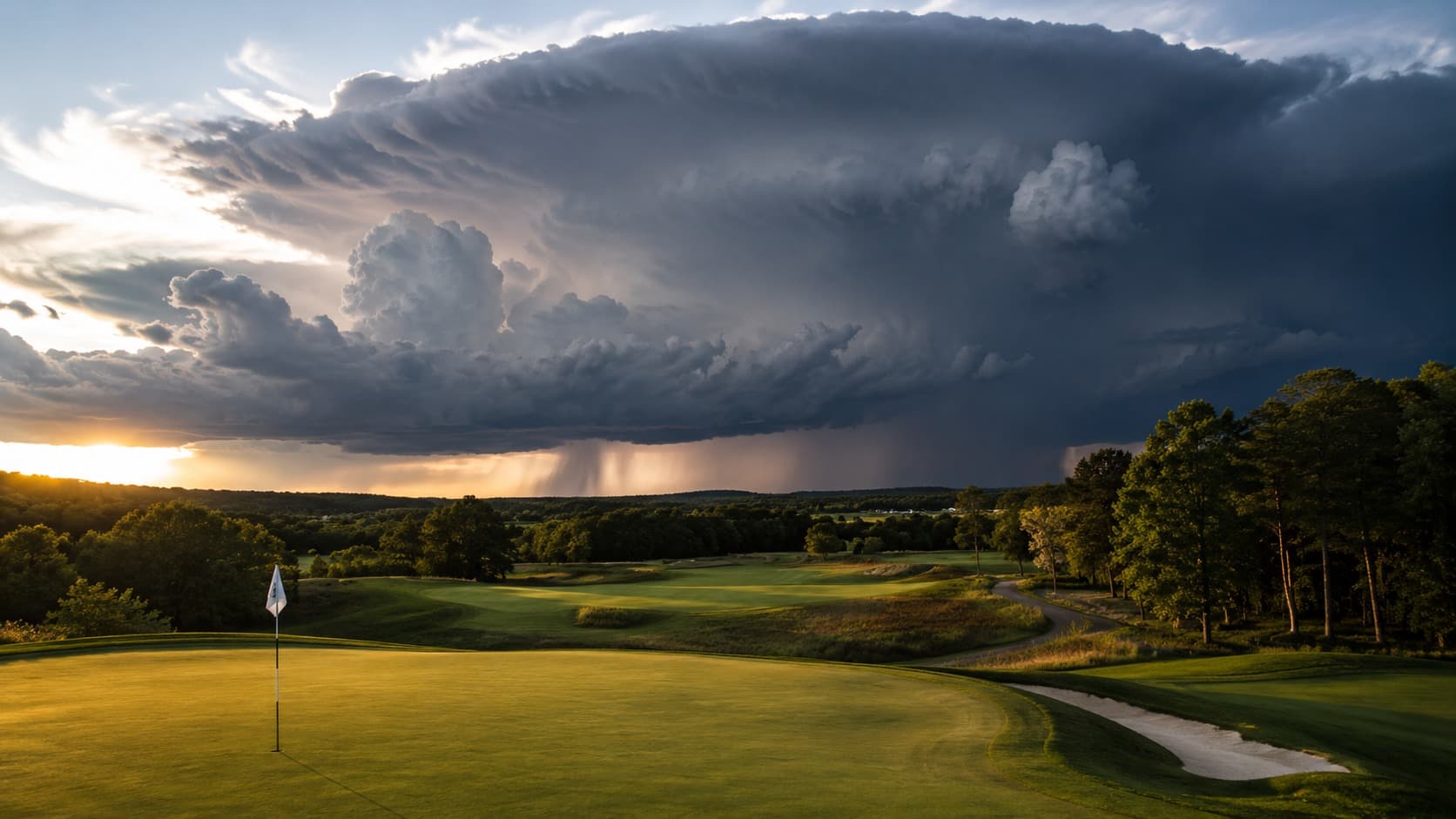
The Three O’Clock Storm: Reading Summer’s Convective Cycle to Protect Your Round
A 40% chance of afternoon thunderstorms does not mean a 40% chance of getting rained on. In the summer convective season it means the morning is nearly clear and the afternoon carries a fast-building, high-energy storm risk driven by a daily heating cycle. Here is the meteorology behind the pattern, the G-Score data on how the storm cycle punishes afternoon tee times across the Southeast, Midwest, and desert Southwest, the lightning-safety decision tree that actually matters, and the workflow that gets you off the course before the first bolt.
Read StoryMinSu Kim
Founder & Golf Data Analyst
MinSu is a data analyst and golfer with 10+ years on the course. He built Golf Weather Score to answer one question: is today a good day to play? He combines weather data, course intelligence, and the proprietary G-Score algorithm to help golfers make smarter decisions.
Every Friday Morning
When Bucksport Golf Club plays best next weekend.
Friday 6am ET: peak G-Score windows for Bucksport Golf Club, wind direction by hour, and one gear call. Three minutes to read, save you the round.
One email a week. Unsubscribe in one click.
The Caddie's Oracle
Draw your luck before the tee off