
Caddie's Gear Advisor
Curated for today's 98°F · Thunderstorm
Storm-Ready Outerwear
Waterproof layers built for 18 holes in the rain
Tour-Grade Umbrellas
68" double-canopy wind-resistant coverage
Wet-Weather Gloves
All-weather grip that performs in the rain
Waterproof Golf Shoes
Keep your feet dry through every fairway
Your Golf Trip, Handled
The Ultimate Golf Trip Planner
Everything you need to play Carolina Lakes — from booking your flight to checking in course-side.
Course-Side Stays
Luxury hotels, resorts, and stay-and-play packages just minutes from the first tee.
Flights
Compare fares across 700+ airlines for the best route to your tee time.
SUV Rentals for Golf Bags
Spacious vehicles with room for clubs, bags, and your foursome.
Travel Insurance
Coverage for medical, weather delays, and gear at your destination.
Carolina Lakes: Course Intelligence
Signature Setup
Carolina Lakes Golf Club sits in the Sandhills of central North Carolina, just outside Sanford, and it is exactly what the name promises: a course routed around water. Roger Rulewich laid it out in 1980. That pedigree matters — Rulewich was Robert Trent Jones Sr.'s lead design associate for decades before going out on his own, and you can read his hand in the way the lakes are used as framing and decision points rather than as gimmicks.
This is not a long course by modern numbers. From the back tees it measures 6,397 yards to a par of 70, with a USGA course rating of 70.7 and a slope of 117. Those figures tell you the honest truth: this is a fair, walkable members' course where the defense is placement and water, not raw length. I haven't walked every hole here myself, so I'm reading the course from its scorecard, its Sandhills setting, and rounds I've played on neighboring Sandhills tracks — and on that evidence the strategy is clear before you ever tee off: keep the ball dry and the rest takes care of itself.
Hole-by-Hole Wind & Playing Lines
The water is the wind multiplier here. On an exposed Sandhills lake hole, a breeze that would be a non-event inland suddenly decides whether your approach carries the hazard. Reading the course from the card and the routing, here is how I'd manage the three holes most likely to cost you strokes:
- The card's #1-handicap par-4 (a longer two-shotter bending toward water): Into the prevailing south-southwest afternoon breeze, a mid-length par-4 plays a full club longer, and on a par-70 layout this is the hole that turns a good round average. Take one more club than the yardage suggests and aim to the dry side of the green — a 20-foot putt beats a ball in the lake every time. I'd rather two-putt from the fat side than short-side myself over water.
- An exposed par-3 over the lake: Wind off the water swirls and is hard to trust. Club for the back of the green, not the flag; the miss long is grass, the miss short is wet.
- A water-guarded closing or mid-round par-4: Firm Bermuda fairways mean a well-struck drive runs out toward the hazard line, so on the downwind holes the smart play is less club off the tee to stop short of the trouble, then a full approach in.
I'm flagging these by type rather than claiming an exact stroke index I can't verify — but the lesson holds on every Sandhills water course I've played: respect the lake, club up into the breeze.
Green & Fairway Characteristics
Everything here is Bermuda — fairways and greens both — sitting on the sandy Sandhills base that drains fast and firms up quickly under sun. That firmness is the course's hidden character: drives chase out, so the 6,397-yard card plays shorter than it looks once the turf bakes, but firm Bermuda greens also reject a steep, spinny approach and let a running shot release toward back pins. The slope of 117 confirms it is not a brutal test for the scratch player, but the grain on Bermuda greens follows the afternoon sun and will swing a downhill putt more than newcomers expect. Read grain first, break second.
Seasonal Weather Pattern
Sanford's golf year is shaped by humidity, not cold. July and August highs run 88–93°F with dew points in the low 70s, and the sandy base means the course stays playable through afternoon heat even when it feels heavy. Spring — late March into May, highs in the 70s — is the best window: firm turf, reliable mornings, and the Bermuda greening up. Winters are mild for a course this far from the coast; January highs sit in the low-to-mid 50s and the Sandhills sand keeps things dry and walkable, though a December front can drop a raw 40°F morning that shortens carry and stiffens the greens. Afternoon thunderstorms are a June-through-August planning factor here as everywhere in the Carolinas.
Local Play Tips
The detail that doesn't show on a scorecard: on sandy Sandhills turf like this, the morning dew burns off fast and the Bermuda firms up by mid-morning, so the early tee gives you both softer, holding greens and — once the sun is up — the most rollout off the tee. The water also reads differently by light: with the morning sun low, the lake edges are harder to judge for depth perception on an approach, so trust your yardage over your eye early. And because this is a fair par-70 rather than a length test, the scoring chances are real — play conservatively to the dry side of every water hole and you can post a number here that a tougher course wouldn't give you.
Pre-Round Weather Workflow
Use the 7-day G-Score and windExposure read to time Carolina Lakes — on a water-framed course, wind direction matters more than the temperature:
1. Book the early window. The morning G-Score runs higher before the Sandhills heat and breeze build; firm Bermuda by mid-morning also means more rollout. The early tee is the scoring tee. 2. Read wind direction, not just speed. A south-southwest afternoon flow loads the longer par-4 approaches and the exposed par-3 over water. Let the windExposure flag, not the yardage, pick your club on the lake holes. 3. Watch the afternoon storm line June–August. Carolina summer convection is reliable; if the 7-day shows building afternoon storms, finish before 1 p.m. rather than risk a hold. 4. In winter, check the overnight low. A 40°F December morning firms the greens and shortens carry — give yourself an extra half-club until the surface softens.
Related Reading
Before you tee off at Carolina Lakes
Best Golf Weather by State: Ranking America by Average G-Score
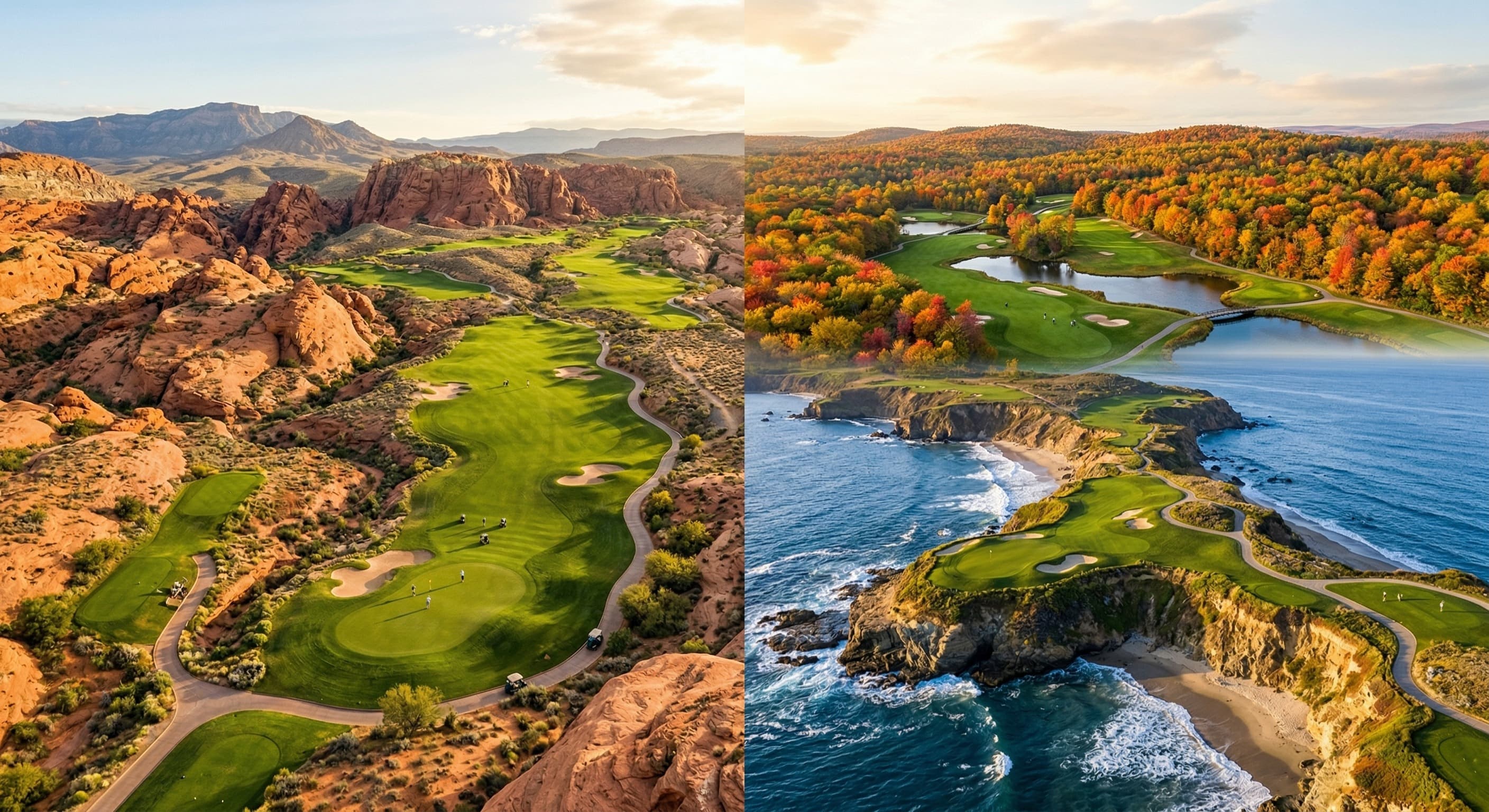
We ranked all 50 US states by average G-Score golf playability. California tops the list, but the results beyond the top five may surprise you.
Read Story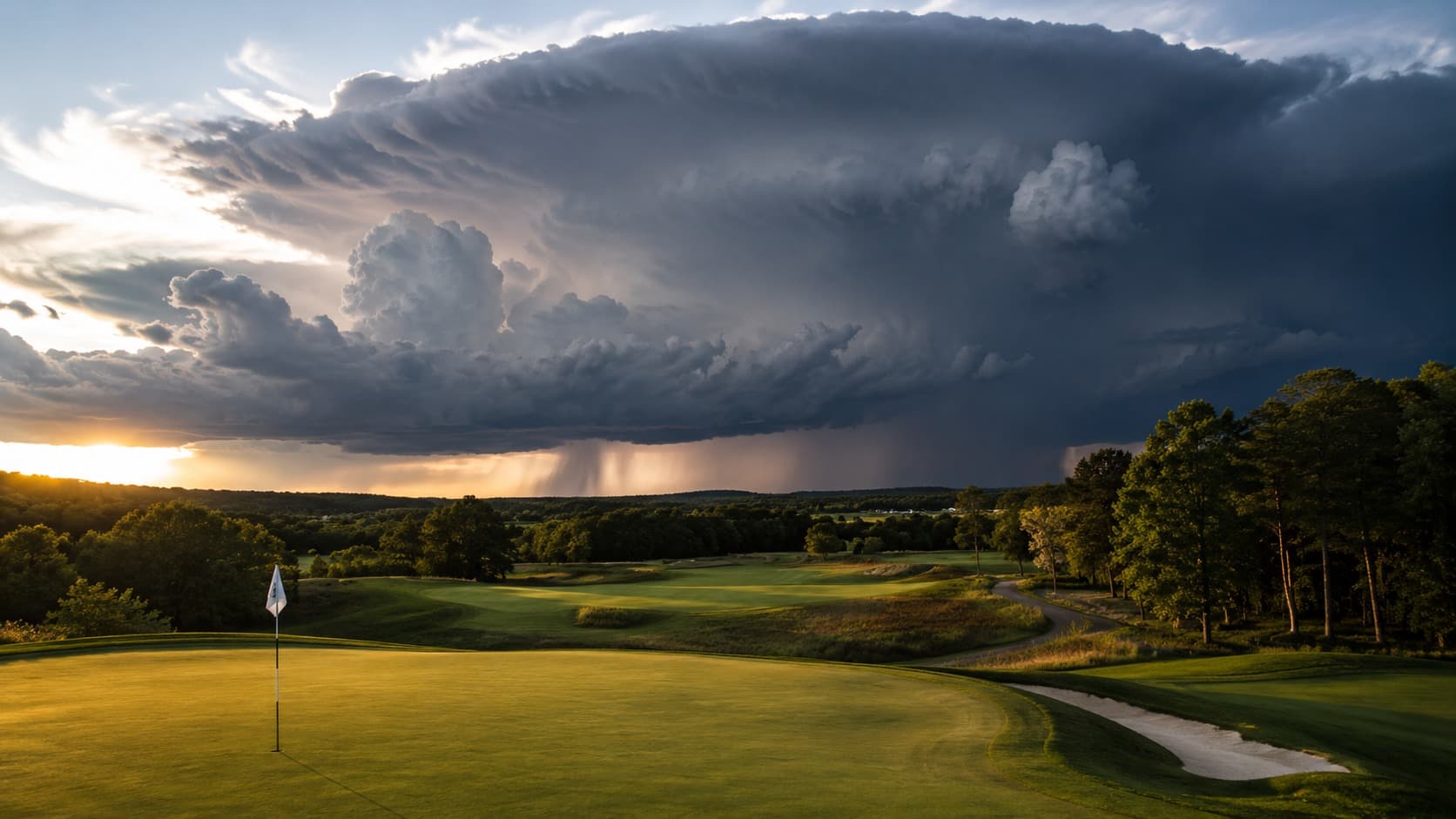
The Three O’Clock Storm: Reading Summer’s Convective Cycle to Protect Your Round
A 40% chance of afternoon thunderstorms does not mean a 40% chance of getting rained on. In the summer convective season it means the morning is nearly clear and the afternoon carries a fast-building, high-energy storm risk driven by a daily heating cycle. Here is the meteorology behind the pattern, the G-Score data on how the storm cycle punishes afternoon tee times across the Southeast, Midwest, and desert Southwest, the lightning-safety decision tree that actually matters, and the workflow that gets you off the course before the first bolt.
Read StoryMinSu Kim
Founder & Golf Data Analyst
MinSu is a data analyst and golfer with 10+ years on the course. He built Golf Weather Score to answer one question: is today a good day to play? He combines weather data, course intelligence, and the proprietary G-Score algorithm to help golfers make smarter decisions.
Every Friday Morning
When Carolina Lakes plays best next weekend.
Friday 6am ET: peak G-Score windows for Carolina Lakes, wind direction by hour, and one gear call. Three minutes to read, save you the round.
One email a week. Unsubscribe in one click.
The Caddie's Oracle
Draw your luck before the tee off