
Caddie's Gear Advisor
Curated for today's 54°F · Clear
Cold-Weather Performance Layers
Thermal mid-layers that move with your swing
Tour Hand Warmers
Rechargeable warmers trusted by caddies
Thermal Base Layers
Lightweight compression that traps heat
Winter Golf Headwear
Beanies and ear warmers built for the links
Your Golf Trip, Handled
The Ultimate Golf Trip Planner
Everything you need to play Fishers Island Club — from booking your flight to checking in course-side.
Course-Side Stays
Luxury hotels, resorts, and stay-and-play packages just minutes from the first tee.
Flights
Compare fares across 700+ airlines for the best route to your tee time.
SUV Rentals for Golf Bags
Spacious vehicles with room for clubs, bags, and your foursome.
Travel Insurance
Coverage for medical, weather delays, and gear at your destination.
Fishers Island Club: Course Intelligence
Signature Setup
I have not played Fishers Island, and I won't pretend a card I don't own — it is one of the hardest tee times in America, a private island club reached only by ferry. What I do have is the crossing: New London to the island on a raw May morning, 49°F at 8 a.m., the chop on Fishers Island Sound running hard out of the southwest while the club's holes sat green and treeless on the eastern point. From the water you see what defends this place — exposure, and nothing to hide behind.
Seth Raynor laid out the course and it opened in 1926, the year before he died. It is the purest expression of his template-hole craft: par 72, only about 6,566 yards from the back, rated 72.2 with a 143 slope — short on paper, brutal in wind. Golf Digest has kept it inside America's top fifteen for decades, and three of its holes (the 4th, 5th, and 9th) appear on national best-holes lists. There are almost no bunkers here; the defense is contour, firmness, and the water on three sides.
Hole-by-Hole Wind & Playing Lines
5th, "Biarritz" (par-3, ~229y). The seaside one-shotter and the course's calling card — an enormous green cut by a deep front-to-middle swale, played straight out toward Block Island Sound. With the prevailing southwest sea breeze quartering off your left shoulder, that 229 yards can demand a wood; take enough club to carry the swale, because a ball left short rolls back to your feet.
9th, "Double Plateau" (par-4, 364y). A blind tee shot to a downhill fairway, then an exposed approach to a two-tiered green sitting hard against the water. Into a stiffening SW wind I'd aim for the safe plateau and two-putt rather than chase a pin perched above the Sound.
4th, "Punchbowl/Alps" (par-4). A blind, climbing second over a ridge to a green that gathers a running shot. Downwind it releases hard; into the wind take an extra club and trust the marker, not your eye.
Green & Fairway Characteristics
The turf is firm fescue and bent, built to be played along the ground. Raynor's greens carry his boldest ideas — the Biarritz swale, a textbook Redan that runs front-right to back-left, a Punchbowl that funnels a low approach, an Eden, and a double-plateau finish to the front nine. They run fast and the trouble is the slope, not the speed; a 143 slope on a sub-6,600-yard course tells you everything about how much the contour and wind matter. Fairways are open and rumpled, so a drive landing on a down-slope gains 20–30 yards of roll on a dry week and gives it all back into the breeze.
Seasonal Weather Pattern
Fishers Island sits at the eastern mouth of Long Island Sound, about two miles off the Connecticut coast, ringed by Fishers Island Sound, Long Island Sound, and Block Island Sound — as maritime as American golf gets. The club is seasonal, roughly May through October. Spring is raw and gusty, 44–62°F with the year's stiffest cold wind. Summer warms to 70–82°F with a dependable southwest sea breeze that builds through the afternoon, commonly 8–16 mph off the water. Early autumn (mid-September into October) is the prize — 55–70°F, the firmest turf of the year, and the calmest mornings before the season closes.
Local Play Tips
The detail no yardage book gives you: getting here is half the round. This is a ferry-only island, so your tee time is dictated by the boat schedule out of New London, and the smart play is the earliest crossing. Members will tell you the same thing the water told me — the morning is a different golf course than the afternoon. Before the SW sea breeze fills in, the exposed water holes (5, 9, and the closing stretch) play a full club or two shorter and far straighter. Wait until early afternoon and the same shots get shoved sideways.
Pre-Round Weather Workflow
Use the 7-day G-Score on this page the way I would. Two or three days out, check whether your ferry and tee window land before or after the afternoon southwest breeze builds — on a short, firm par 72, that one factor is worth several strokes. The morning of, read the windExposure panel: a SW reading means the 5th Biarritz plays into a quartering wind and the 9th approach gets exposed over the water, so favor the fat of the green and take the extra club. If the forecast pairs low humidity with a dry stretch, expect the fescue and the Punchbowl green at their fastest — land everything short and let the firm ground carry it, because on Raynor's island it is wind and firmness, never yardage, that writes your score.
Related Reading
Before you tee off at Fishers Island Club
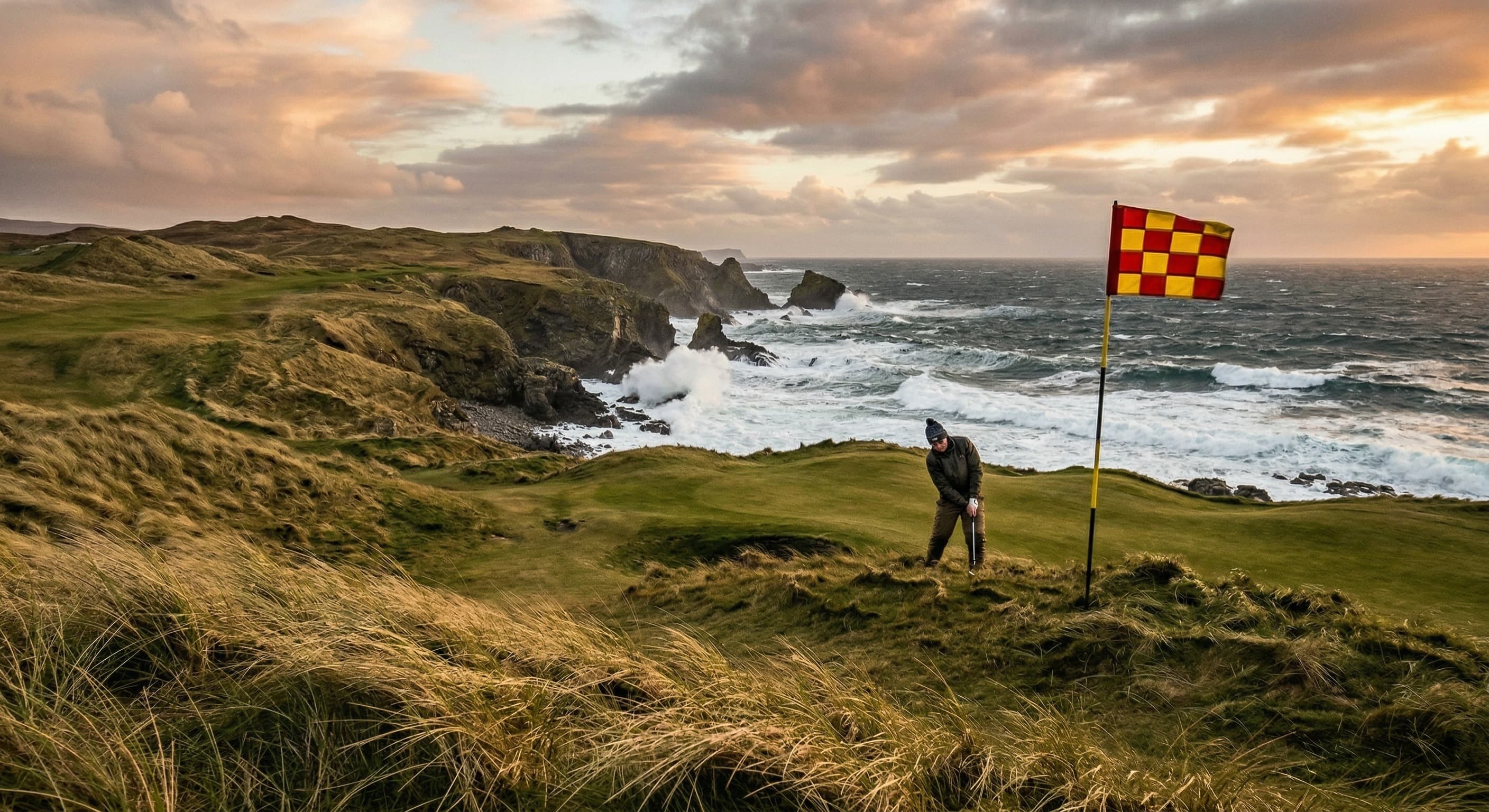
America's 20 Windiest Golf Courses: A G-Score Wind Analysis
We ranked America's 20 windiest golf courses using G-Score wind penalty data. See how coastal gusts and prairie gales reshape playability scores.
Read Story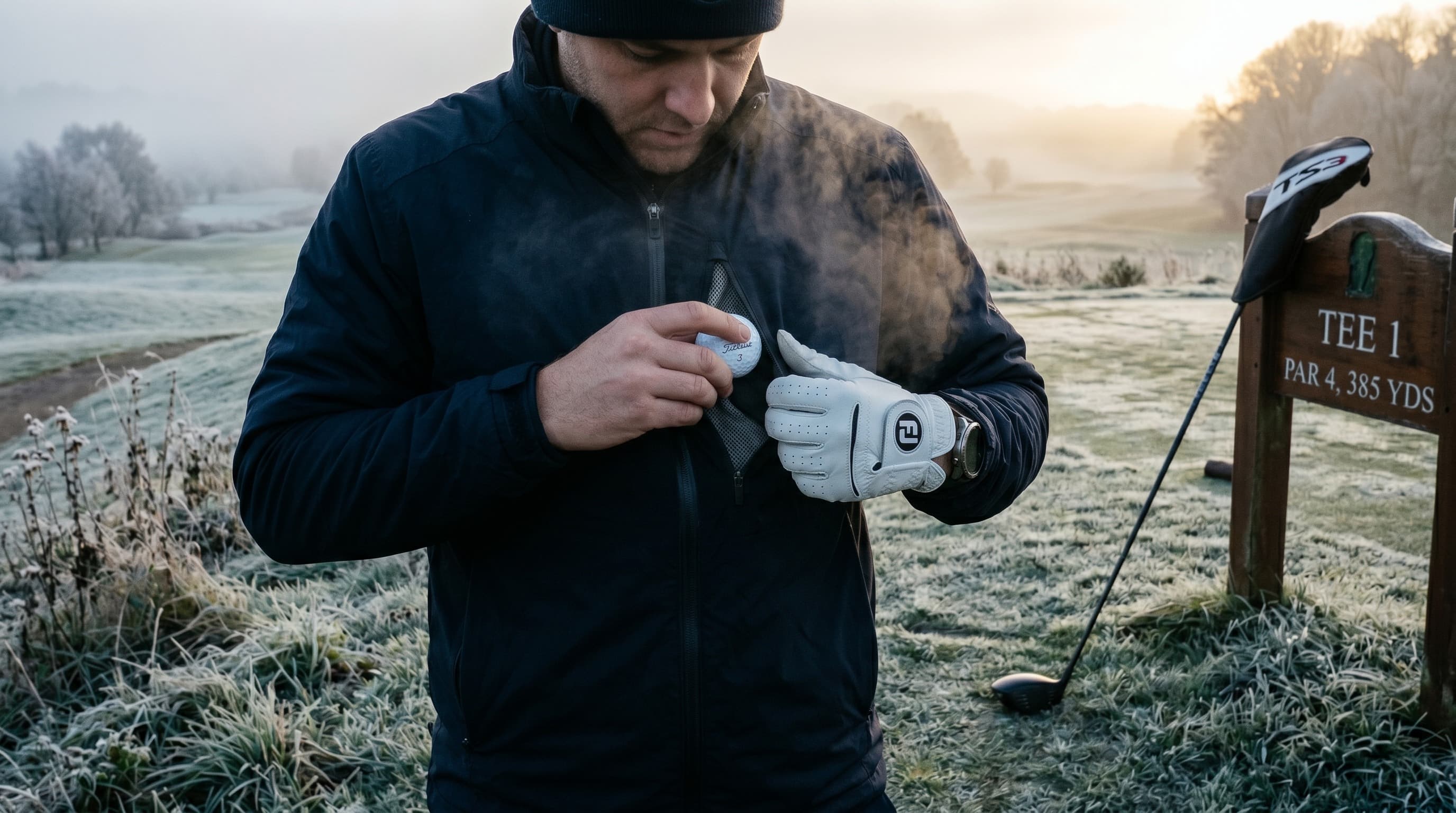
How Cold Weather Steals Distance: The Ball Compression Physics Every Golfer Should Know
Every 10°F drop costs the average golfer two to four yards of driver carry. Here is the physics — ball compression, air density, muscle temperature — and the field data we pulled from G-Score-monitored cold rounds to show exactly how distance loss compounds, and how to compensate without changing your swing.
Read StoryDanorie
Editorial & Data
Golf Weather Score is built by Danorie. We compute the G-Score — our own playability rating — from live NOAA forecasts and published course scorecards, so any US course can be compared on any day with a single number. Methodology and data sources are documented on every page.
Every Friday Morning
When Fishers Island Club plays best next weekend.
Friday 6am ET: peak G-Score windows for Fishers Island Club, wind direction by hour, and one gear call. Three minutes to read, save you the round.
One email a week. Unsubscribe in one click.
The Caddie's Oracle
Draw your luck before the tee off