
Caddie's Gear Advisor
Curated for today's 70°F · Mist
Tour-Level Drivers
Engineered for maximum distance and forgiveness
Laser Rangefinders
Pin-seeking technology for precision approaches
Premium Golf Balls
Tour-caliber spin and distance performance
Performance Sunglasses
Polarized lenses optimized for reading greens
Your Golf Trip, Handled
The Ultimate Golf Trip Planner
Everything you need to play Boothbay Harbor Country Club — from booking your flight to checking in course-side.
Course-Side Stays
Luxury hotels, resorts, and stay-and-play packages just minutes from the first tee.
Flights
Compare fares across 700+ airlines for the best route to your tee time.
SUV Rentals for Golf Bags
Spacious vehicles with room for clubs, bags, and your foursome.
Travel Insurance
Coverage for medical, weather delays, and gear at your destination.
Boothbay Harbor Country Club: Course Intelligence
Signature Setup
Boothbay Harbor Country Club sits on the rocky midcoast of Maine, above the working harbor town the course is named for. The club's golf goes back to a nine-hole layout from the early 1920s, but the course most visitors play today is the 18-hole expansion completed in 2007 under Bruce Hepner, a designer who came up through the Renaissance Golf side of the business and is known for letting native ground and ledge dictate the routing rather than bulldozing it flat. That restraint shows here: granite outcrops, fescue edges, and elevation that follows the natural fall of the land toward the water. I have not played Boothbay Harbor myself — it is a private midcoast club with a short season — so the hole detail below leans on the routing, the published yardages, and, more than anything, how Gulf of Maine weather behaves on a coastal course like this one.
Hole-by-Hole Wind & Playing Lines
The defining weather force here is the afternoon sea breeze off the Atlantic, which builds out of the southwest as the land heats up against the cold water. On a calm 7 a.m. tee time the course is a different golf course than it is at 2 p.m. I've played enough cold-water coastal mornings — Maine, the Monterey Peninsula, the Carolinas in March — to trust one rule: when the air is colder than you expect and the water is colder still, the morning carry is short and the afternoon carry is long, and the sea breeze is the switch between the two.
- The long inward par-4 (#1 handicap): Into a 12–18 mph SW sea breeze this plays a full club and a half longer than the card. The mistake is reaching for driver and a fairway metal to "beat" the wind; the headwind balloons both. Treat it as a three-shot hole — fairway off the tee, hybrid to a comfortable wedge number, and accept par.
- The signature par-3 over the ledge ravine: Wind funnels up the rock face here and reads differently at the green than at the tee. Watch the tops of the spruce behind the green, not the flag — the pin can hang limp while the ball is getting shoved at altitude.
- An exposed coastal par-4 near the high point of the property: With a quartering breeze the ball holds against the wind one direction and rides it the other. Favor the side of the fairway that leaves your approach into the wind, where you can spin it and stop it on firm fescue.
Green & Fairway Characteristics
The greens are bentgrass-and-fescue surfaces sitting over rocky ledge, which means they drain hard and firm up quickly once the morning fog burns off — expect putts in the low-to-mid 10s on a dry afternoon, faster than a typical short-season municipal. Approaches that land soft in the morning will release and run by mid-afternoon, so the same yardage asks for two different shots depending on tee time. Fairways are firm fescue that sits the ball up cleanly but gives little forgiveness in the longer native edges. The terrain works up and down across ledge, so a fair number of approach shots play uphill and longer than the number; club up on the inward holes rather than trusting the yardage book.
Seasonal Weather Pattern
This is one of the shortest golf seasons on the East Coast — realistically mid-May through mid-October, with the shoulders cold and damp. June mornings often start near 52–58°F with heavy dew and fog off the Gulf of Maine; the water stays cold into July, which keeps the marine layer alive even on warm days. Peak playability is late August into September: 60s in the morning, drier air, firm turf, and the sea breeze a touch gentler than midsummer. October brings color and crisp 45–55°F mornings but the season closes fast once the first hard frosts arrive on the ledge.
Local Play Tips
The fog here is not background scenery — it is a carry-distance signal. When the harbor holds fog past 8 a.m., the fairways are wet and your ball is landing dead with no run, so the firm-and-fast lines you'd play at noon don't exist yet. Members and early visitors take the first tee times for two reasons: the fairways are softer but truer before traffic, and you finish the front nine before the SW sea breeze stands up and turns the inward holes into a longer course.
Pre-Round Weather Workflow
Use the 7-day G-Score to find the morning with the lowest combined fog and wind load — on a Maine coastal course that is almost always the earliest tee time, where the score can run several points higher than a breezy afternoon. Check windExposure the night before: a SW reading means the inward par-4s and the ledge par-3 will play long and you should plan to club up. If the model shows persistent marine fog into mid-morning, expect heavy fairways and short carry numbers, and play the opening holes conservatively until the harbor clears rather than fighting it shot by shot.
Related Reading
Before you tee off at Boothbay Harbor Country Club
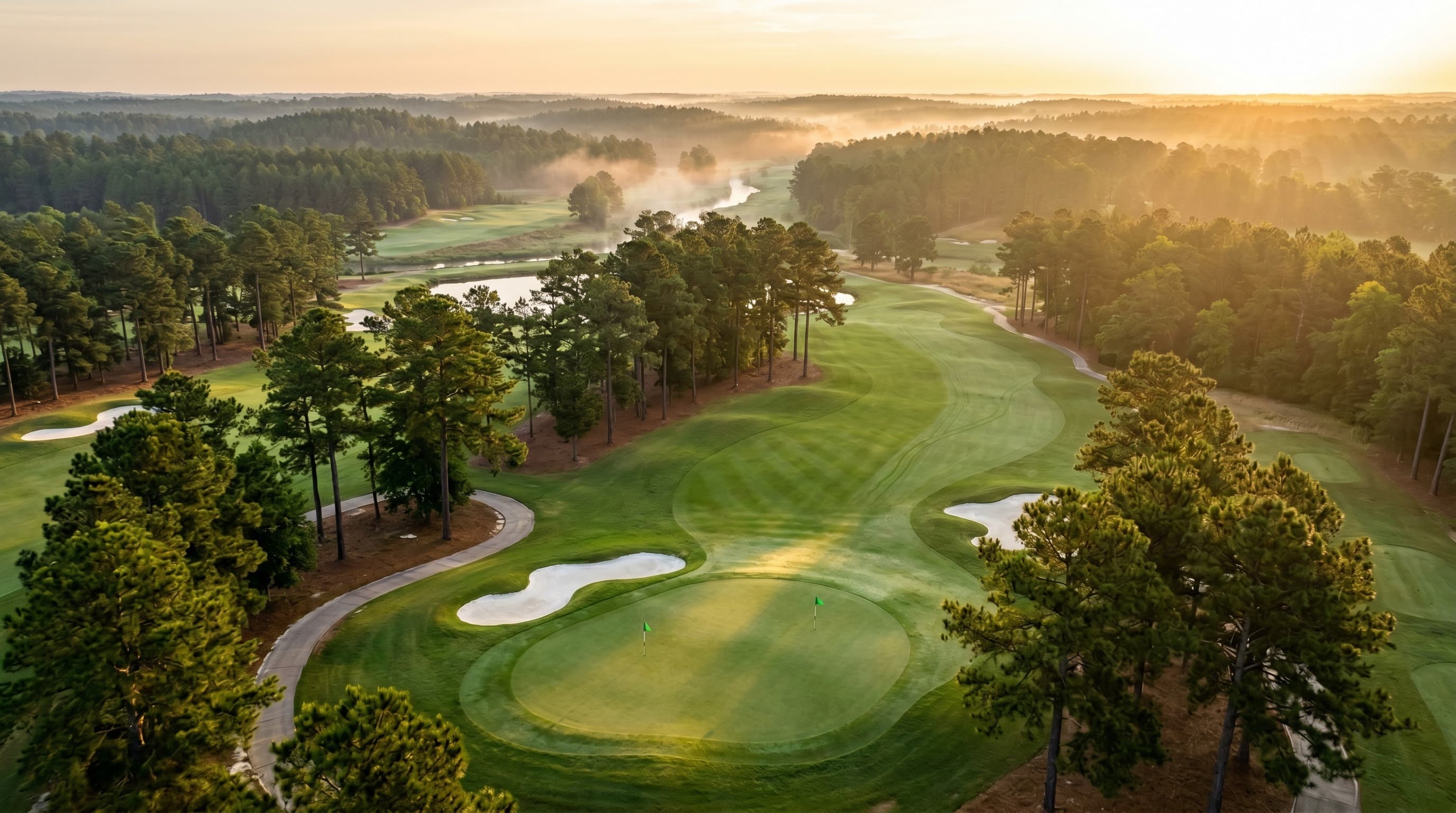
The May 2026 G-Score Heatmap: Where American Golf Peaks This Spring
May is the most underrated month on the American golf calendar. Five regions hit their annual peak this spring, three turn quietly hostile, and the data tells a clearer story than the brochures. Here is where to play, where to avoid, and how to time your booking window.
Read Story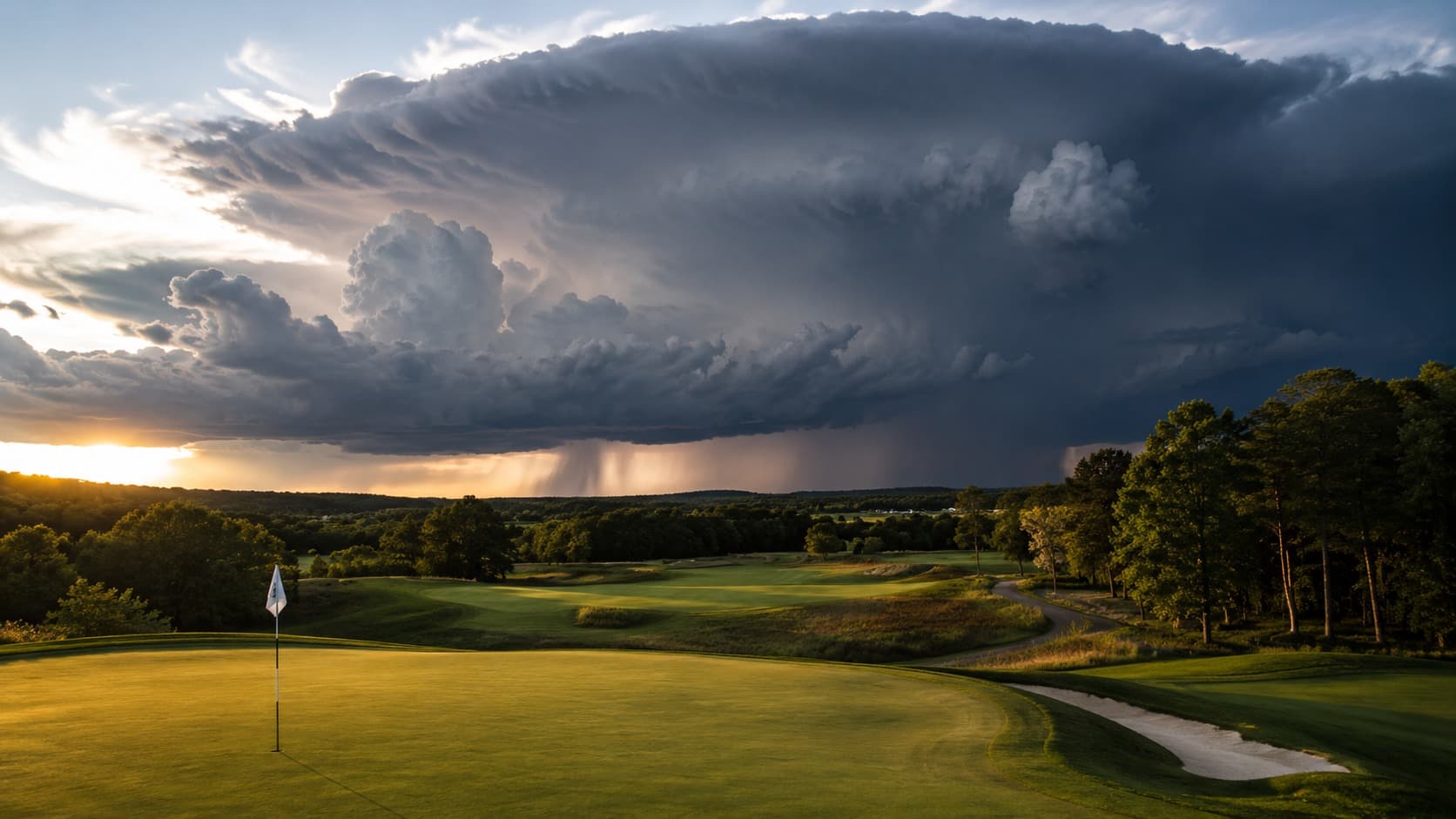
The Three O’Clock Storm: Reading Summer’s Convective Cycle to Protect Your Round
A 40% chance of afternoon thunderstorms does not mean a 40% chance of getting rained on. In the summer convective season it means the morning is nearly clear and the afternoon carries a fast-building, high-energy storm risk driven by a daily heating cycle. Here is the meteorology behind the pattern, the G-Score data on how the storm cycle punishes afternoon tee times across the Southeast, Midwest, and desert Southwest, the lightning-safety decision tree that actually matters, and the workflow that gets you off the course before the first bolt.
Read StoryMinSu Kim
Founder & Golf Data Analyst
MinSu is a data analyst and golfer with 10+ years on the course. He built Golf Weather Score to answer one question: is today a good day to play? He combines weather data, course intelligence, and the proprietary G-Score algorithm to help golfers make smarter decisions.
Every Friday Morning
When Boothbay Harbor Country Club plays best next weekend.
Friday 6am ET: peak G-Score windows for Boothbay Harbor Country Club, wind direction by hour, and one gear call. Three minutes to read, save you the round.
One email a week. Unsubscribe in one click.
The Caddie's Oracle
Draw your luck before the tee off