
Caddie's Gear Advisor
Curated for today's 72°F · Clear
Tour-Level Drivers
Engineered for maximum distance and forgiveness
Laser Rangefinders
Pin-seeking technology for precision approaches
Premium Golf Balls
Tour-caliber spin and distance performance
Performance Sunglasses
Polarized lenses optimized for reading greens
Your Golf Trip, Handled
The Ultimate Golf Trip Planner
Everything you need to play Castine Golf Club — from booking your flight to checking in course-side.
Course-Side Stays
Luxury hotels, resorts, and stay-and-play packages just minutes from the first tee.
Flights
Compare fares across 700+ airlines for the best route to your tee time.
SUV Rentals for Golf Bags
Spacious vehicles with room for clubs, bags, and your foursome.
Travel Insurance
Coverage for medical, weather delays, and gear at your destination.
Castine Golf Club: Course Intelligence
Signature Setup
The first thing the bay does is lie to your eyes about distance. Standing on an exposed tee in coastal Maine with open water behind the green, there's no backdrop to anchor your depth perception, and a 150-yard shot can read like 130. Castine Golf Club sits on the Blue Hill peninsula in the small harbor town of Castine, and it carries real history — the club was founded in 1897, which puts it among the oldest in the United States, and the nine you play today was laid out by Willie Park Jr., the two-time Open champion and architect, in 1921. It is a nine-hole walk of roughly 3,000 yards, par 35, with the small greens and modest mounding of its era rather than engineered modern contouring. In the interest of honesty: I have played coastal-Maine nines in this style but have not kept a full scorecard around all nine holes here, so the per-hole reads below lean on this peninsula's wind behavior and the course's vintage Park Jr. DNA rather than a shot-by-shot recollection.
Hole-by-Hole Wind & Playing Lines
On an exposed peninsula the breeze off Penobscot Bay does most of the defending. Through the summer the dominant flow is from the south to southwest, and like most coastal sites it sits calm at sunrise and builds through the afternoon as the land heats and the sea breeze fills in. The card's longest par 4 — figure about 400 yards, and the #1 stroke hole — points into that southwest pressure once the day warms, effectively stretching to 420-plus and turning a smooth 6-iron approach into a firm 5. The play is one more club and the front edge, never the flag. On the exposed short par 3 toward the water, the hazard is not the carry; it is a quartering breeze flattening a high shot and pushing it offline, so I'd take the club that holds its line into the wind rather than the one that matches the bare number. When a cool northwest morning reverses the flow, those same holes shrink and the firm turf runs — let the ball release.
Green & Fairway Characteristics
The surfaces are cool-season turf — bent and poa greens with fairways to match — which is the rule across this latitude. The greens are small and old-style, rewarding an approach that lands soft and sits rather than one that skips toward a back flag. Through a dry stretch in late July or August the peninsula firms up quickly and putts gain pace; after a coastal rain the same greens slow a noticeable step and hold their line. The terrain rolls gently with the shoreline, so blind shots are scarce, but the small targets and breeze mean club selection, not contour-reading, is the day's real test.
Seasonal Weather Pattern
Castine's golf calendar is short and cool, which is exactly its charm. The playable season runs roughly May through October; midsummer afternoons sit in the comfortable low-to-mid 70s°F, far milder than inland courses at the same latitude because the bay moderates the air. Mornings in June can start in the low 50s°F with sea fog hanging over the water until the sun burns it off, often around 9 or 10 a.m., leaving the greens soft and slow until then. By September the air sharpens, the wind turns more northwesterly, and the turf firms — to me the best month here, with tight surfaces and steady light.
Local Play Tips
This is a member-rooted nine-hole club in a small town, so the first variable is access, not the tee sheet — call ahead and confirm visitor and guest policy before you drive out onto the peninsula. The club is also known locally for its clay tennis courts, a reminder that this is a turn-of-the-century summer-colony club, not a resort. Walk it: at roughly 3,000 yards across nine holes the loop rewards a caddie's pace and a light bag, and a morning round beats the bay breeze. Pack a layer even in July — when fog sits on the water the tees run ten degrees cooler than the parking lot, and your hands feel it on the opening swings.
Pre-Round Weather Workflow
Check the 7-day G-Score for Castine before you lock a time. In summer the best number lands in the first slot of the day — calm air, soft greens after the fog lifts — and it slides off through the afternoon as the southwest sea breeze fills in. Read the windExposure value too: anything past about 10 mph out of the south argues for an extra club on the long par 4 and a wind-holding flight on the exposed par 3 toward the bay. And if a coastal rain came through in the last day, count on slower cool-season greens and less release, so favor an approach that lands near the pin over one that runs at it.
Related Reading
Before you tee off at Castine Golf Club
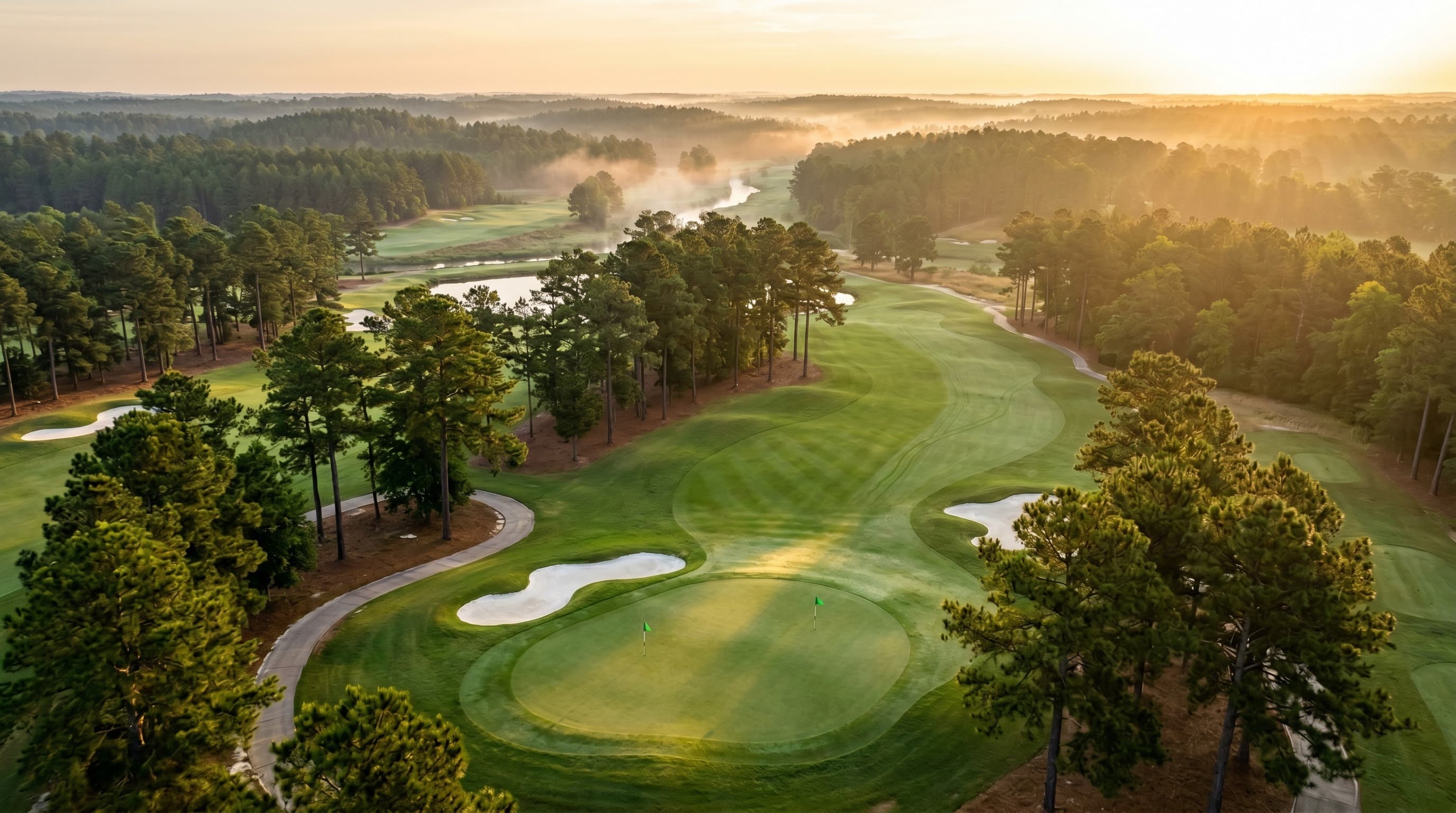
The May 2026 G-Score Heatmap: Where American Golf Peaks This Spring
May is the most underrated month on the American golf calendar. Five regions hit their annual peak this spring, three turn quietly hostile, and the data tells a clearer story than the brochures. Here is where to play, where to avoid, and how to time your booking window.
Read Story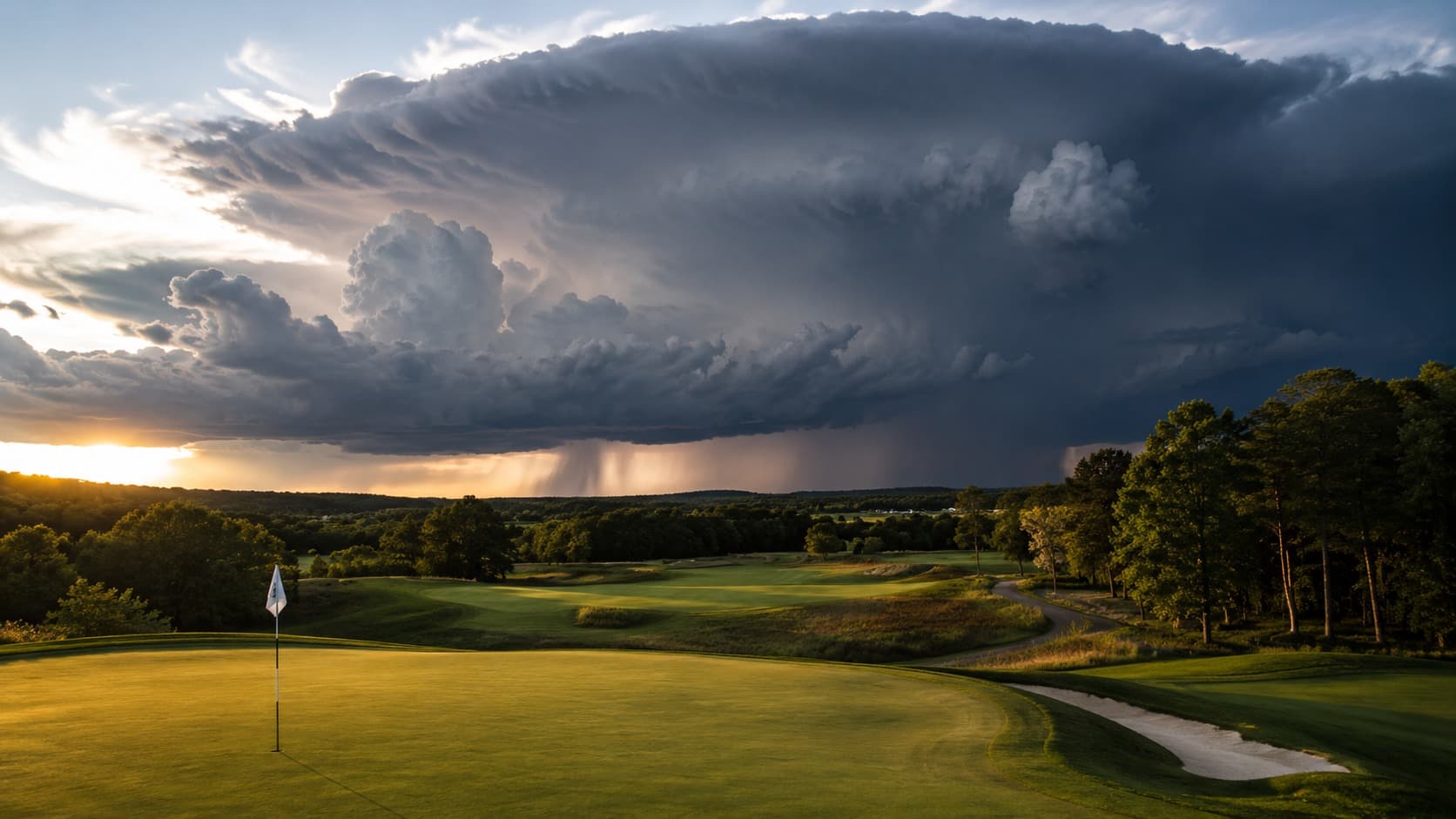
The Three O’Clock Storm: Reading Summer’s Convective Cycle to Protect Your Round
A 40% chance of afternoon thunderstorms does not mean a 40% chance of getting rained on. In the summer convective season it means the morning is nearly clear and the afternoon carries a fast-building, high-energy storm risk driven by a daily heating cycle. Here is the meteorology behind the pattern, the G-Score data on how the storm cycle punishes afternoon tee times across the Southeast, Midwest, and desert Southwest, the lightning-safety decision tree that actually matters, and the workflow that gets you off the course before the first bolt.
Read StoryMinSu Kim
Founder & Golf Data Analyst
MinSu is a data analyst and golfer with 10+ years on the course. He built Golf Weather Score to answer one question: is today a good day to play? He combines weather data, course intelligence, and the proprietary G-Score algorithm to help golfers make smarter decisions.
Every Friday Morning
When Castine Golf Club plays best next weekend.
Friday 6am ET: peak G-Score windows for Castine Golf Club, wind direction by hour, and one gear call. Three minutes to read, save you the round.
One email a week. Unsubscribe in one click.
The Caddie's Oracle
Draw your luck before the tee off