
Caddie's Gear Advisor
Curated for today's 66°F · Clear
Tour-Level Drivers
Engineered for maximum distance and forgiveness
Laser Rangefinders
Pin-seeking technology for precision approaches
Premium Golf Balls
Tour-caliber spin and distance performance
Performance Sunglasses
Polarized lenses optimized for reading greens
Your Golf Trip, Handled
The Ultimate Golf Trip Planner
Everything you need to play Canyon Lakes Golf Course & Brewery;Canyon Lakes Golf Club — from booking your flight to checking in course-side.
Best time to golf in CaliforniaCourse-Side Stays
Luxury hotels, resorts, and stay-and-play packages just minutes from the first tee.
Flights
Compare fares across 700+ airlines for the best route to your tee time.
SUV Rentals for Golf Bags
Spacious vehicles with room for clubs, bags, and your foursome.
Travel Insurance
Coverage for medical, weather delays, and gear at your destination.
Canyon Lakes Golf Course & Brewery;Canyon Lakes Golf Club: Course Intelligence
Signature Setup
Eastern Washington golf is a wind-and-heat puzzle before it is anything else. Canyon Lakes Golf Course & Brewery sits in Kennewick, in the Tri-Cities, on the high-desert floor of the Columbia Basin — and the desert dictates how the course plays far more than any single bunker does. The course was designed by John Steidel, a Pacific Northwest architect based in the Tri-Cities, and opened in 1981 as an 18-hole par 72. I have not walked these fairways at dawn the way I have my home tracks in California, so I'll be straight about it: the hole-level reads below lean on Steidel's known routing style and on the basin's well-documented weather, not on a personal scorecard. What I can speak to with confidence is the climate — and here, climate is strategy.
Hole-by-Hole Wind & Playing Lines
The #1-handicap par-4 (~440y): By late morning the prevailing southwest basin wind is up, and a hole this long into it stops being a driver-wedge proposition. The smart play is to club up on the approach and accept a longer iron rather than over-swing off the tee chasing a number you won't reach anyway. Favor the wide side; a flyer out of dry rough into wind is the score-killer.
The water par-3 (~170y): Fully exposed, no tree screen to break the gust. A crosswind off the open ground turns a stock 7-iron into a guess — on a windy afternoon I'd take one more club and swing easy to keep the ball under the breeze rather than flush a high one that balloons and comes up short of the water carry.
A downhill par-4 into the coulee: Steidel used the natural elevation of the canyon terrain. Where a hole drops toward the low ground, calm-morning tee shots fly long; the same shot at 3 p.m. with a tailwind can run through the fairway. Read the wind direction before you decide whether the slope helps or hurts.
Green & Fairway Characteristics
The greens are bentgrass and, in the dry months, the whole property firms up the way high-desert courses do. From July into September there is real roll on the fairways — your carry number and your total number are not the same, which is the opposite of a wet Puget Sound winter. That firmness also means approach shots release hard, so landing the ball short and letting it run is often safer than flying it to the flag on a baked green. Slope from the back tees runs in the mid-130s, so the course defends par through length and wind, not tricked-up greens. Spring and fall play softer and more receptive.
Seasonal Weather Pattern
The Tri-Cities is one of the driest, sunniest pockets in Washington — annual rainfall is under 9 inches, nothing like the coast. Summer (Jul–Aug) is hot and arid: daytime highs frequently top 95°F and can push past 100°F, with low humidity and strong afternoon wind funneling through the Columbia Basin. Winter is genuinely cold for golf — daytime temps near or below 40°F, occasional fog and frost delays, and a short, low-flying ball. The shoulder seasons, April–May and September–October, are the sweet spot: mild highs in the 60s–70s°F, lighter wind in the mornings, and the most comfortable scoring conditions of the year.
Local Play Tips
The one piece of local knowledge that matters most here costs nothing: respect the afternoon wind. In summer it is not occasional — it is the daily pattern, building through the day off the open basin. Locals tee off early to beat both the heat and the gusts. Hydration is a genuine scoring factor at 95°F-plus; a tired, dehydrated swing late in a desert round leaks more strokes than any single hazard. And with a brewery on site, the post-round plan is built in — but save it for after the 18th, not the turn.
Pre-Round Weather Workflow
Check the 7-day G-Score before you book, and for Canyon Lakes read it through a desert lens. The two signals that matter are temperature and wind, not rain. In summer, target the earliest tee time available: morning G-Scores will run well above afternoon ones because the heat and the basin wind both climb through the day. Use the windExposure read for the open par-3s and the long #1-handicap hole — a southwest afternoon wind reshapes all of them. In the shoulder seasons, mid-morning is fine and the wind is softer. In winter, watch for frost-delay mornings and plan for a ball that flies short in the cold, dense air.
Related Reading
Before you tee off at Canyon Lakes Golf Course & Brewery;Canyon Lakes Golf Club
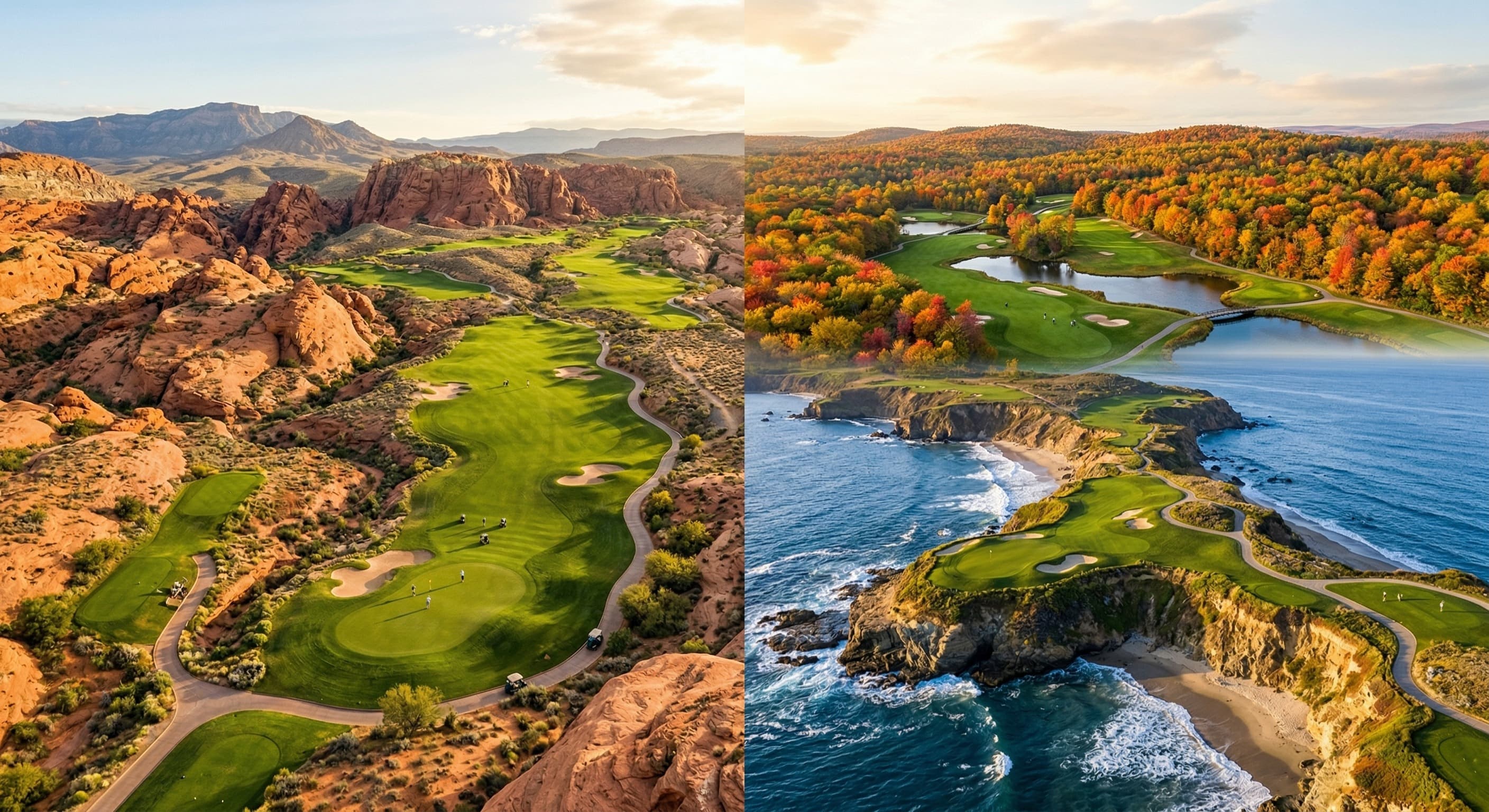
Best Golf Weather by State: Ranking America by Average G-Score
We ranked all 50 US states by average G-Score golf playability. California tops the list, but the results beyond the top five may surprise you.
Read Story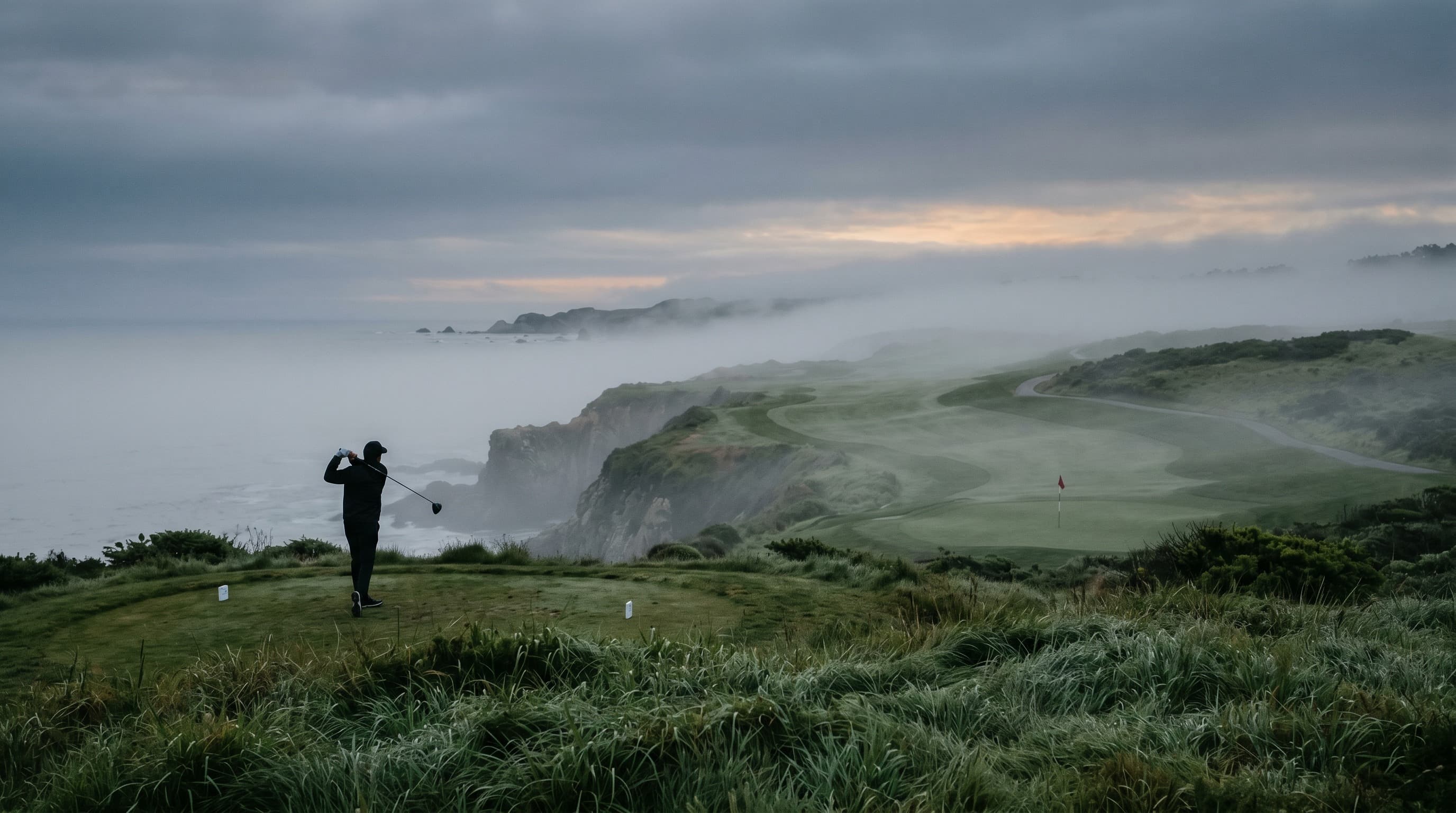
Reading Coastal Wind: How the Marine Layer Reshapes Pebble Beach, Bandon, and the Pacific Coast Game
Coastal golf does not play by inland rules. The marine layer suppresses wind in the morning, then releases it through midday in a thermal cycle that turns a calm 7am tee into a 22mph back nine. Here is the meteorology behind the pattern, the G-Score data that confirms it across the Pacific coast, and the morning workflow that turns the marine layer from a confusion into a competitive advantage.
Read StoryDanorie
Editorial & Data
Golf Weather Score is built by Danorie. We compute the G-Score — our own playability rating — from live NOAA forecasts and published course scorecards, so any US course can be compared on any day with a single number. Methodology and data sources are documented on every page.
Every Friday Morning
When Canyon Lakes Golf Course & Brewery;Canyon Lakes Golf Club plays best next weekend.
Friday 6am ET: peak G-Score windows for Canyon Lakes Golf Course & Brewery;Canyon Lakes Golf Club, wind direction by hour, and one gear call. Three minutes to read, save you the round.
One email a week. Unsubscribe in one click.
The Caddie's Oracle
Draw your luck before the tee off